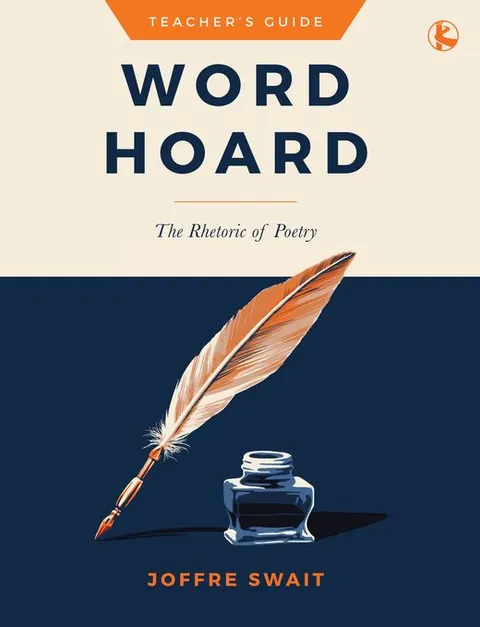
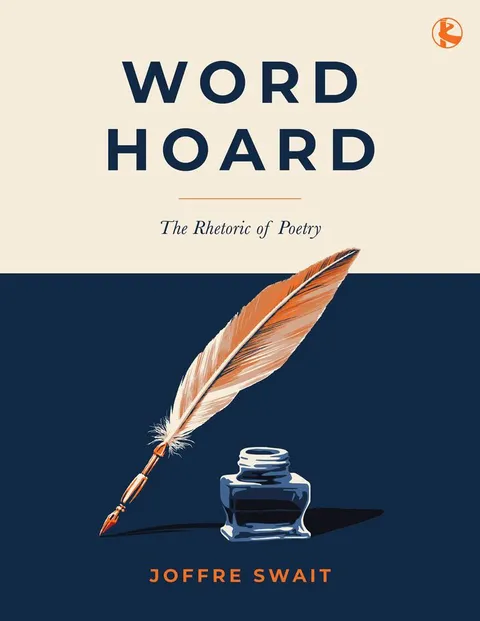
- Thirty-two lessons in eight units
- The poems each lesson needs, printed in the lesson
- Study questions and writing exercises throughout
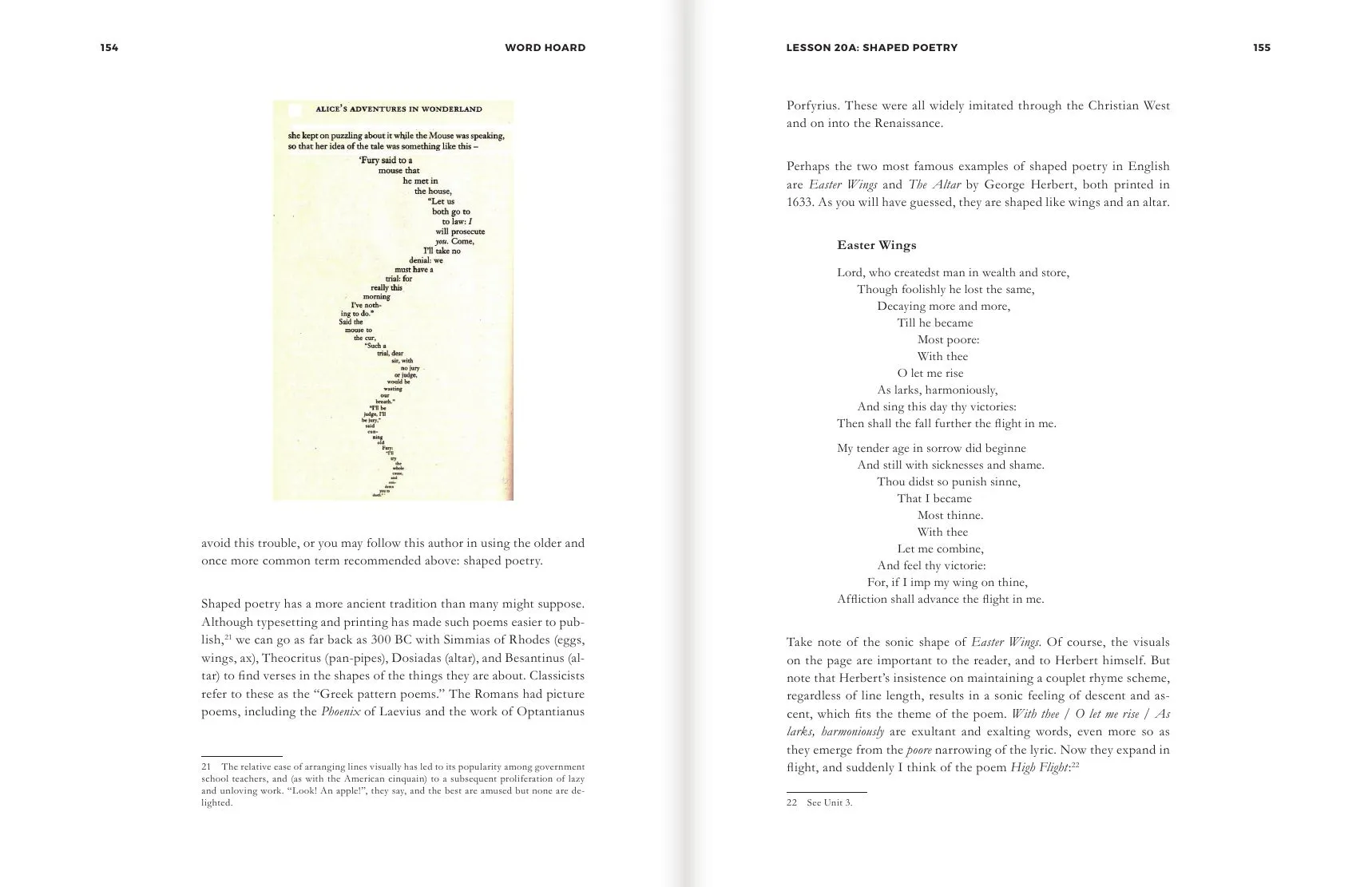
- For upper high school and early college
A PRACTICAL GUIDE TO NOBILITY
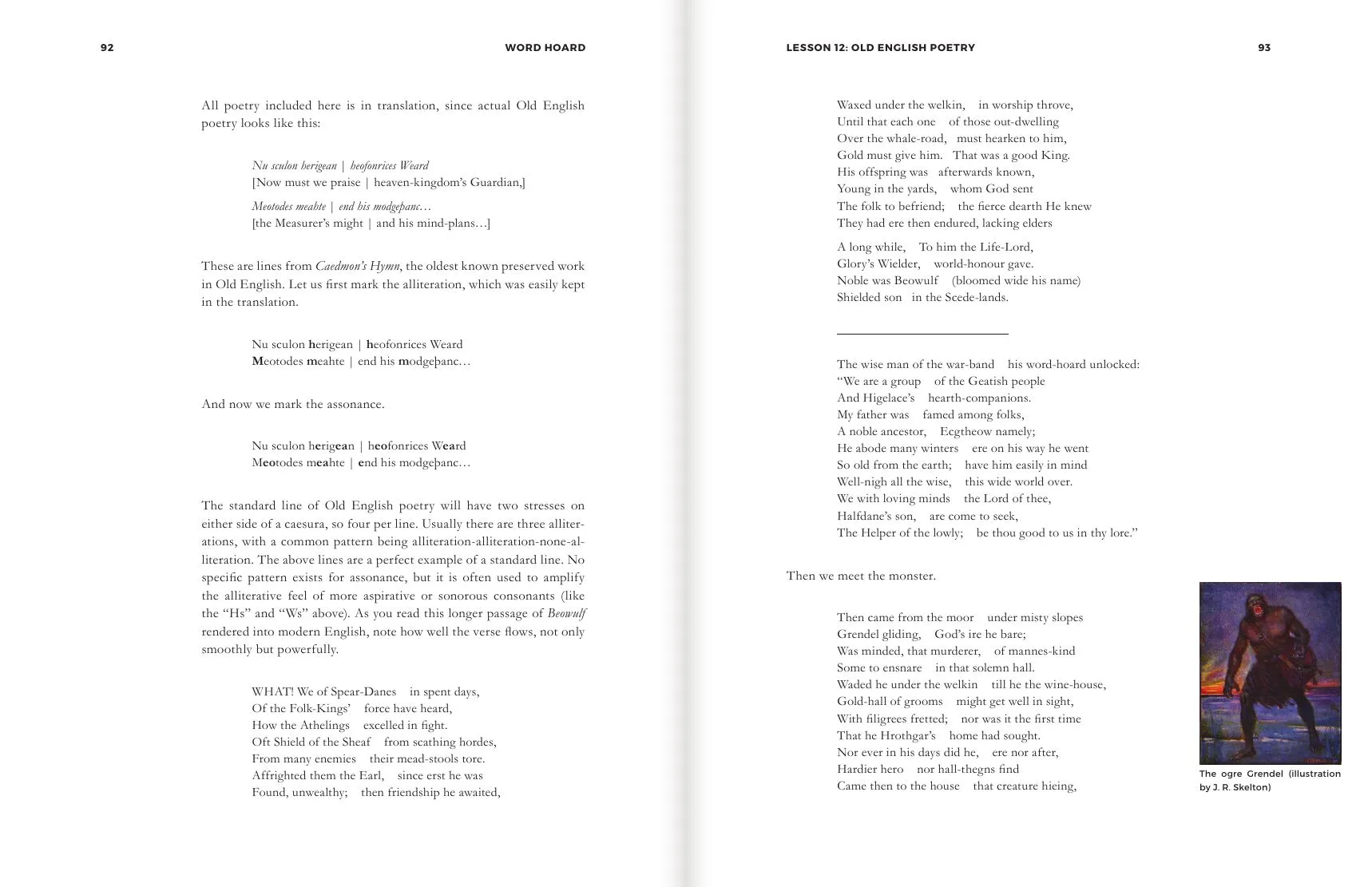
The capstone of the sequence. Building on Fitting Words and Grammar of Poetry, Word Hoard teaches students to read, hear, write and perform poetry: English “in its most elevated forms,” wielded for truth, goodness and beauty. The poet Joffre Swait calls it “the natural fruit of my life’s work.”
“As you will soon learn, our words are our greatest treasures, our finest tools, and our most dangerous weapons.”
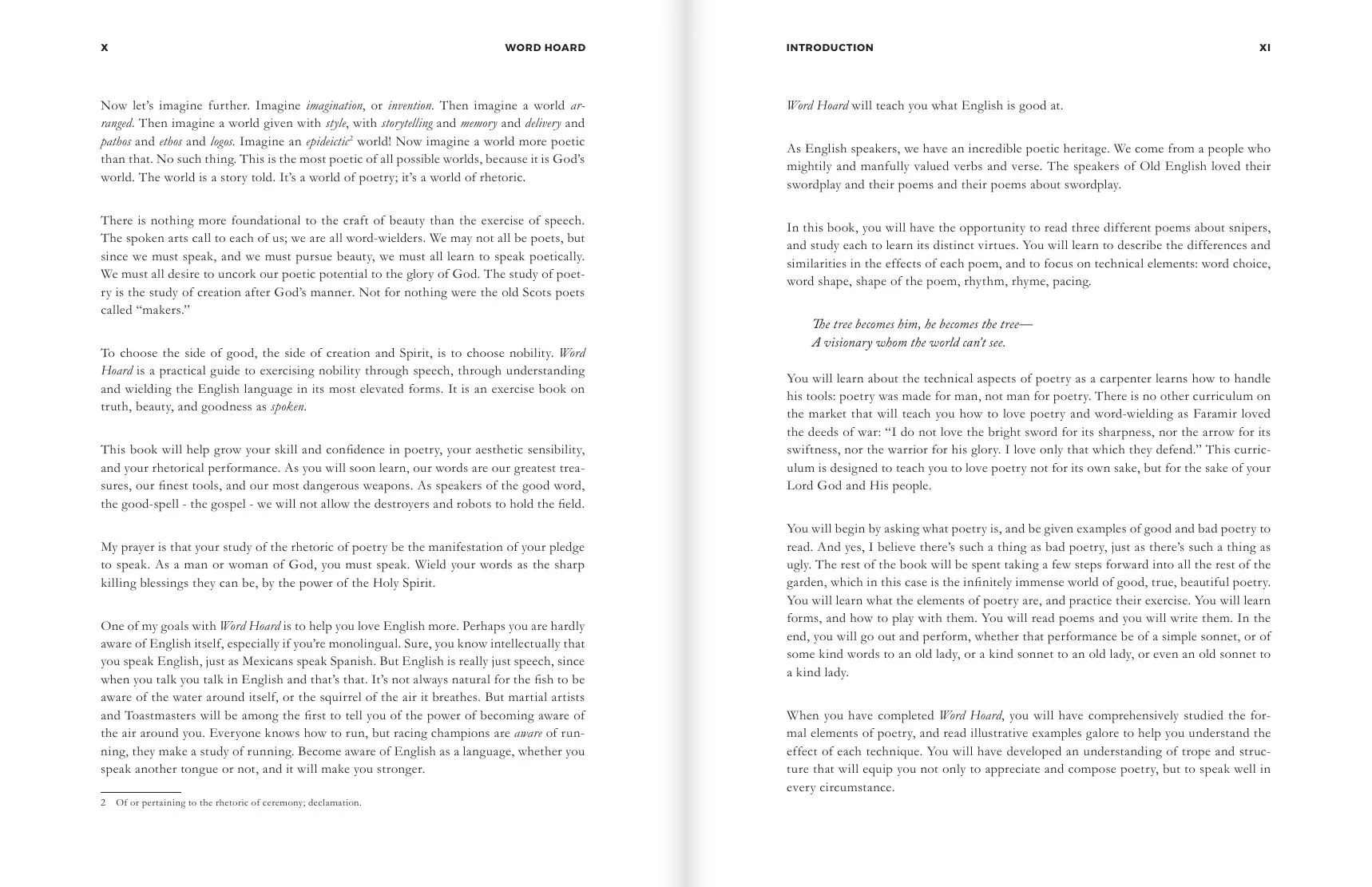
Word Hoard · Introduction
“You will read poems and you will write them. In the end, you will go out and perform.”
From “What is Poetry?” to “Reading Reified.”

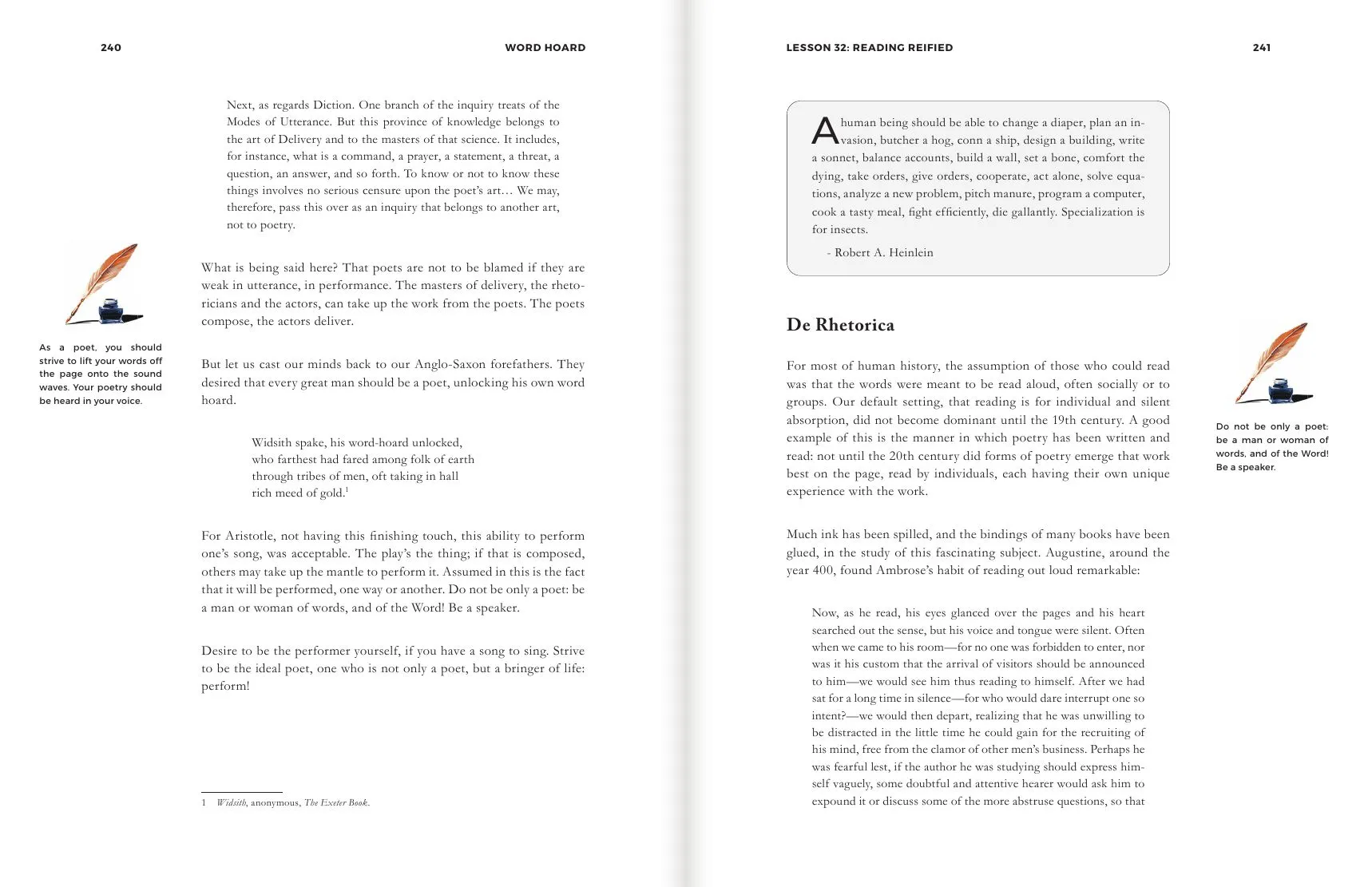
“Your final assignment is to read aloud, to perform, a new poem to an audience at a public venue.”
A coffee shop’s open mic, a writers’ group, an evening with the youth group: the course ends with each student performing a poem they have written themselves. The Teacher’s Guide puts it simply: “This should be something special.”
“…whether that performance be of a simple sonnet, or of some kind words to an old lady, or a kind sonnet to an old lady, or even an old sonnet to a kind lady.”
Word Hoard · Introduction
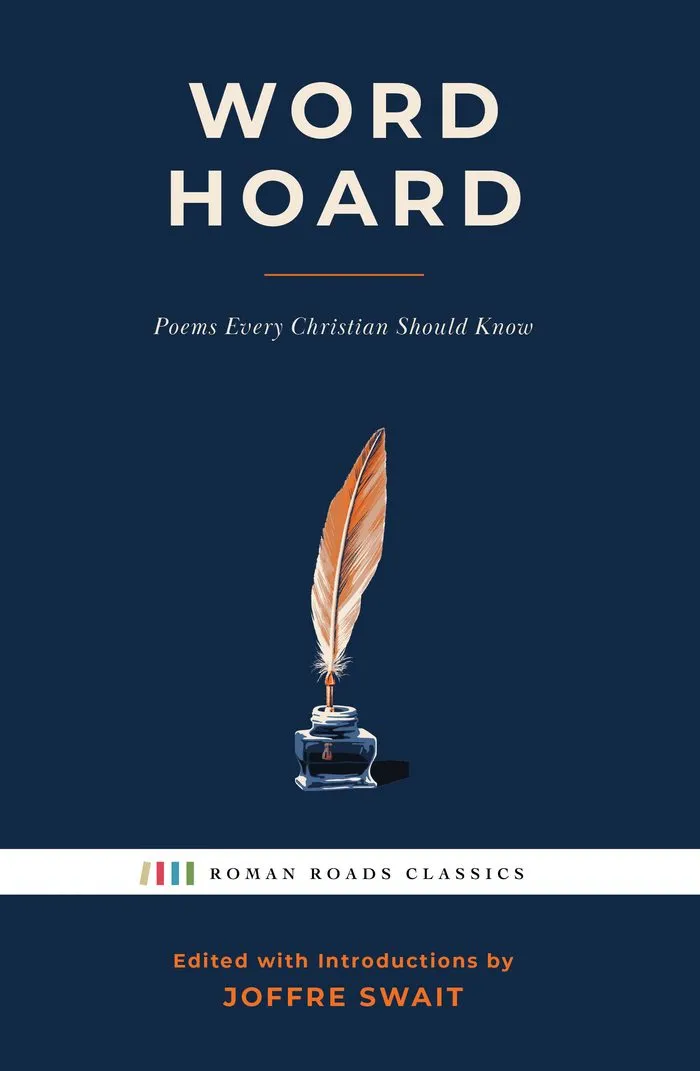
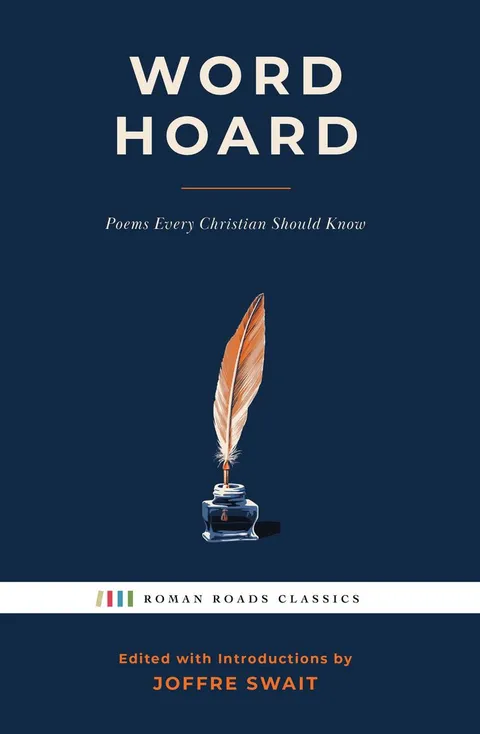
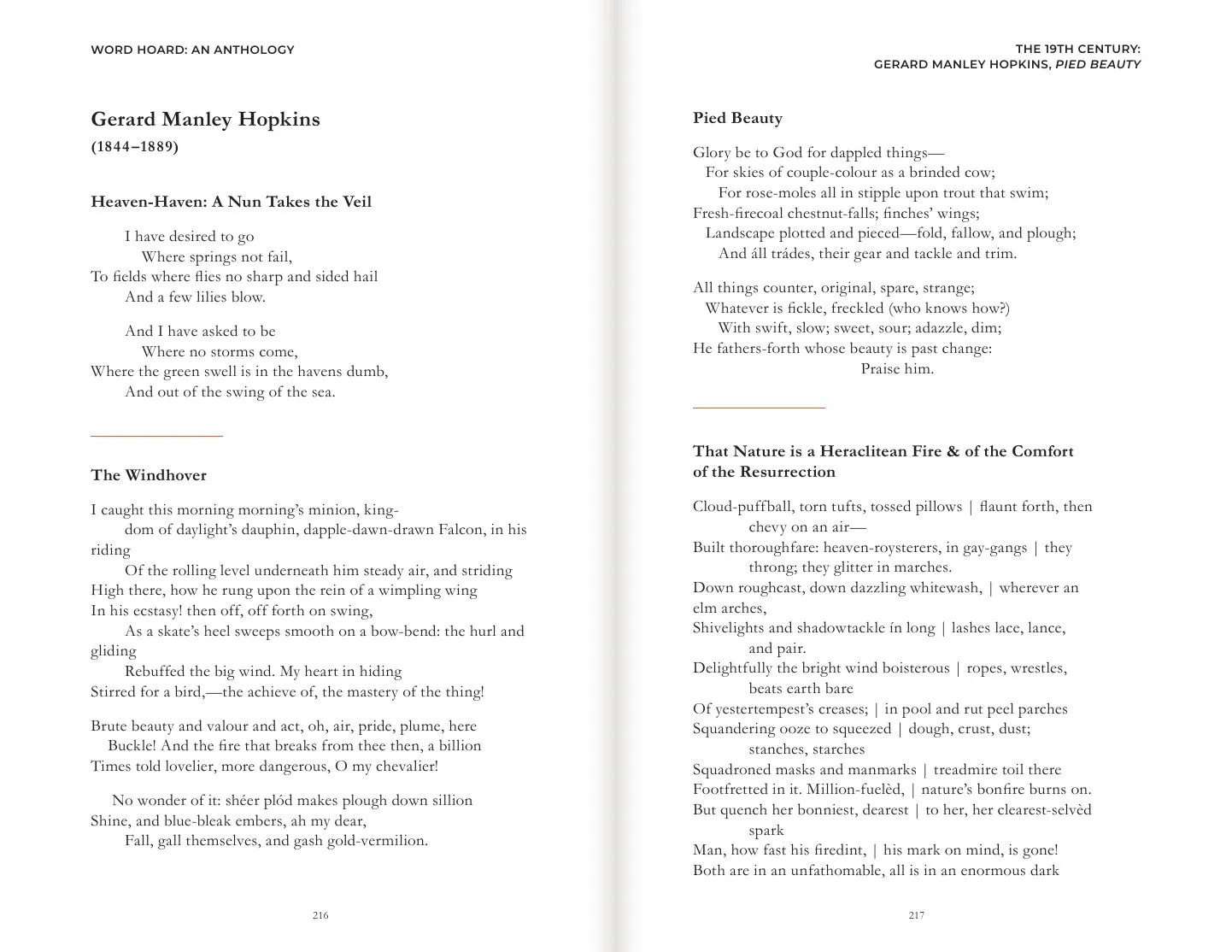
“Not a collection of Christian poetry, mind you, but a Christian collection of poetry.”
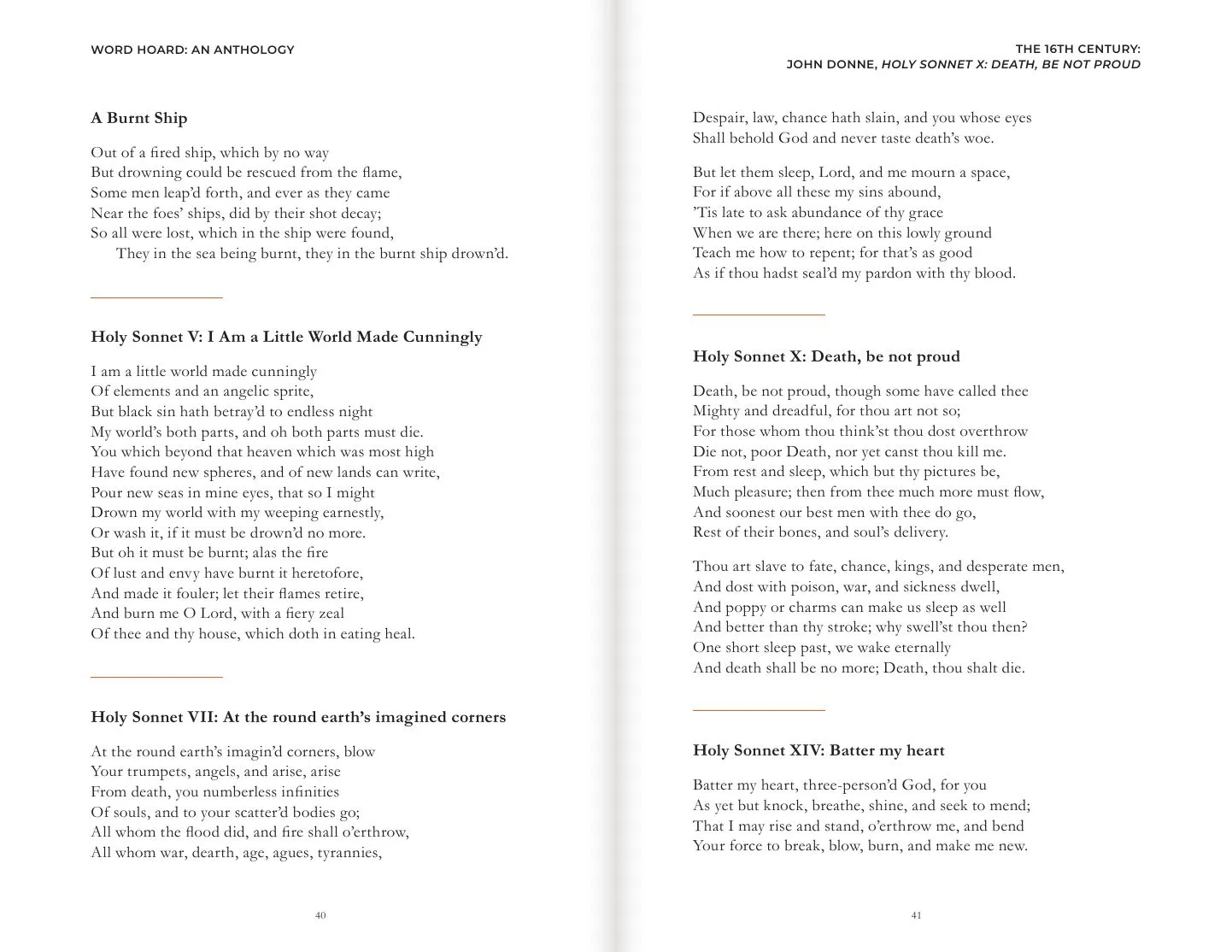
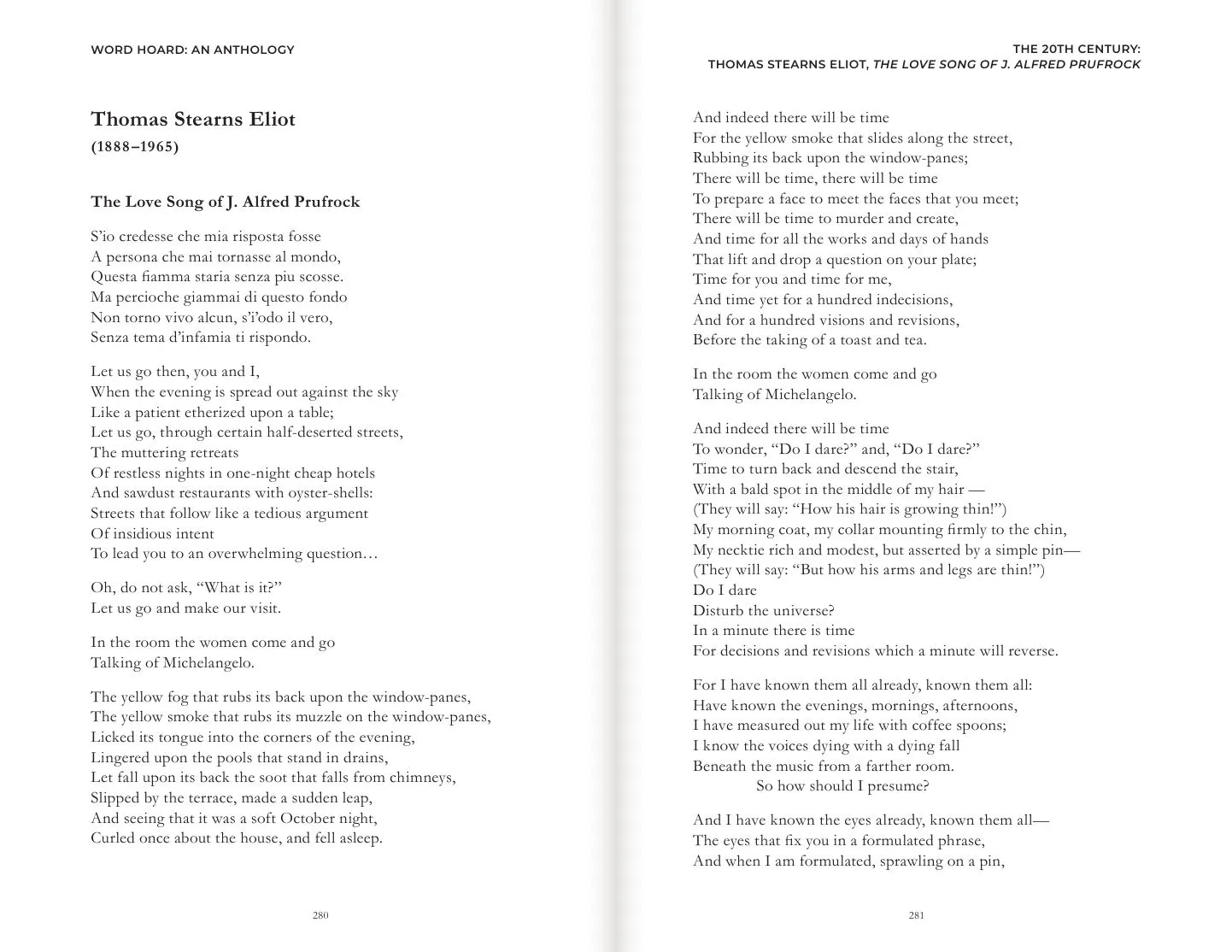
The textbook is a bootcamp; the anthology is meant “to turn poetry from an excursion into a lifestyle.” The poems run in order of the poet’s birth, each century opened by a short introduction, and the Teacher’s Guide sets anthology readings for every week of the year. “Heretics and atheists are included alongside Puritan pastors and Roman Catholic martyrs.”
Geoffrey Chaucer · William Dunbar · Walter Raleigh · Edmund Spenser · Philip Sidney · Mary Sidney Herbert · William Shakespeare · Chidiock Tichborne · John Donne · Robert Herrick · George Herbert · John Milton · Anne Bradstreet · Thomas Traherne · Edward Taylor · William Cowper · William Blake · William Wordsworth · Samuel Taylor Coleridge · John Keats · Henry Wadsworth Longfellow · Edgar Allan Poe · Alfred, Lord Tennyson · Matthew Arnold · George MacDonald · Emily Dickinson · Christina Rossetti · Lewis Carroll · Thomas Hardy · Gerard Manley Hopkins · A. E. Housman · Francis Thompson · Rudyard Kipling · W. B. Yeats · G. K. Chesterton · Robert Frost · Carl Sandburg · T. S. Eliot · Wilfred Owen · W. H. Auden · Dylan Thomas · John Gillespie Magee Jr. and 26 more.
“These are poems about love and death and the Church as a hippopotamus. Expect conversations.”

Joffre Swait, also known as Joffre the Giant, lives in Idaho with his wife and five children. He is the author of two poetry collections, Well Met: Poems of Companionship, and Made In the Image: Plain Poems, and is co-author of Christian Pipe-Smoking: an Introduction to Holy Incense. Joffre has a deep love for the poetry of the West, and is more ambivalent about the Norman invasion than Tolkien was. He is also the author of Word Hoard: The Rhetoric of Poetry, published by Roman Roads Press.
A full year (32 weeks, four days a week) with weekly anthology readings, or a single semester (16 weeks) focused on composition. Schedules for both are in the Teacher’s Guide.