
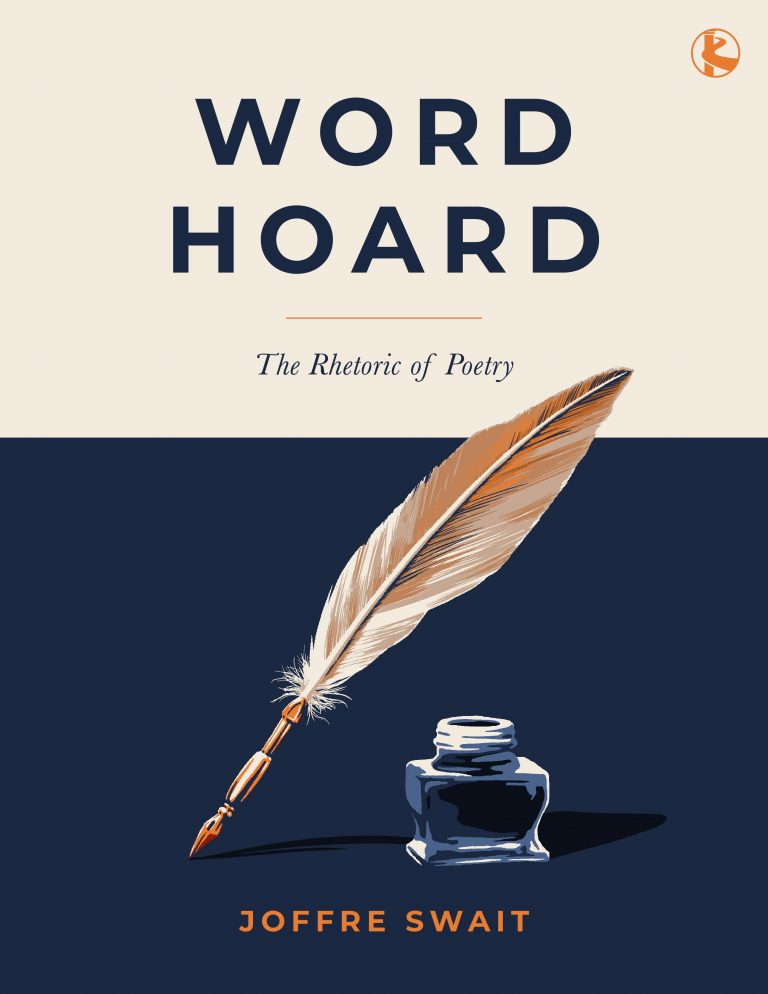
Good poems and bad ones, side by side, to learn the difference. “Examination is good. Dissection is bad.”
“Do not be only a poet: be a man or woman of words, and of the Word! Be a speaker.”
About the course
The rhetoric of poetry
This book will help grow your skill and confidence in poetry, your aesthetic sensibility, and your rhetorical performance. As you will soon learn, our words are our greatest treasures, our finest tools, and our most dangerous weapons. As speakers of the good word, the good-spell, the gospel, we will not allow the destroyers and robots to hold the field.
Intended for upper high school, as well as early college.
In the course
Read, hear, write, perform
Rhythm, meter and rhyme, scanned aloud, and the alliteration of Old and Middle English.
Blank verse, terza rima, epigrams, sonnets, villanelles and shaped poems, then poems of your own on death, delight, food, nature, sports and transience.
A new poem of your own, read aloud to an audience at a public venue.
Table of contents
Eight units, thirty-two lessons
From “What is Poetry?” to “Reading Reified.”
- Unit I: Why Study Poetry?3 lessons
- Unit II: Understanding the Poetic Elements2 lessons
- Unit III: Rhythm & Meter6 lessons
- Unit IV: Alliteration & Assonance3 lessons
- Unit V: Poetic Forms7 lessons
- Unit VI: Some Tropes, Some Styles, Some Memeing, No Synecdoche5 lessons
- Unit VII: Composing7 lessons
- Unit VIII: Performance1 lesson
Show all the lessonsHide the lessons
- Introductionix
- Thanksxiii
Unit I: Why Study Poetry?1
- Lesson 1: What is Poetry?3
- Lesson 2: What is Bad Poetry?9
- Lesson 3: Your Word Hoard17
Unit II: Understanding the Poetic Elements25
- Lesson 4: Introduction to the Poetic Elements27
- Lesson 5: How Poetic Elements Elevate Expression35
Unit III: Rhythm & Meter41
- Lesson 6: Exploring Rhythms in Poetry43
- Lesson 7: Meter—The Measure of Poetry49
- Lesson 8: A Word from Dr. Johnson53
- Lesson 9: Rhyme59
- Lesson 10: Natural Rhythm65
- Lesson 11: Real Meter75
Unit IV: Alliteration & Assonance83
- Lesson 12: Old English Poetry85
- Lesson 13: Middle English Poetry93
- Lesson 14: Alliteration & Assonance Now99
Unit V: Poetic Forms105
- Lesson 15: Free Verse107
- Lesson 16: Blank Verse & Terza Rima113
- Lesson 17: Poetic Aphorisms, Epigrams & Cinquains121
- Lesson 18: Sonnets129
- Lesson 19: Villanelle139
- Lesson 20a: Shaped Poetry147
- Lesson 20b: Jack of All Forms, Master of New Ones153
Unit VI: Some Tropes, Some Styles, Some Memeing, No Synecdoche157
- Lesson 21: Figures of Speech159
- Lesson 22a: Imagery165
- Lesson 22b: Simile & Metaphor173
- Lesson 23: Repetition & Parallels179
- Lesson 24: Onomatopoeia193
Unit VII: Composing199
- Lesson 25: What Do I Write?201
- Lesson 26: Death207
- Lesson 27: Delight211
- Lesson 28: Food215
- Lesson 29: Nature219
- Lesson 30: Sports221
- Lesson 31: Transience227
Unit VIII: Performance231
- Lesson 32: Reading Reified233

The author
Joffre Swait
Joffre Swait, also known as Joffre the Giant, lives in Idaho with his wife and five children. He is the author of two poetry collections, Well Met: Poems of Companionship, and Made In the Image: Plain Poems, and is co-author of Christian Pipe-Smoking: an Introduction to Holy Incense. Joffre has a deep love for the poetry of the West, and is more ambivalent about the Norman invasion than Tolkien was. He is also the author of Word Hoard: The Rhetoric of Poetry, published by Roman Roads Press.

Publishing information
- Author
- Joffre Swait
- Publisher
- Roman Roads Press, 2026
- Format
- 8.5 × 11 in, consumable, perfect bound · 262 pages
- ISBN
- 978-1-963505-31-3
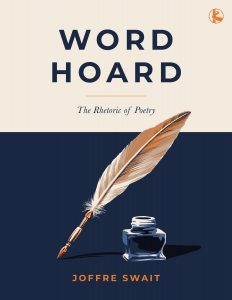
Word Hoard
$49.00