
By 68 poets, from Robert Mannyng and Chaucer to Dylan Thomas and John Gillespie Magee.
Roman Roads Classics
Poetry · 219 poems by 68 poets
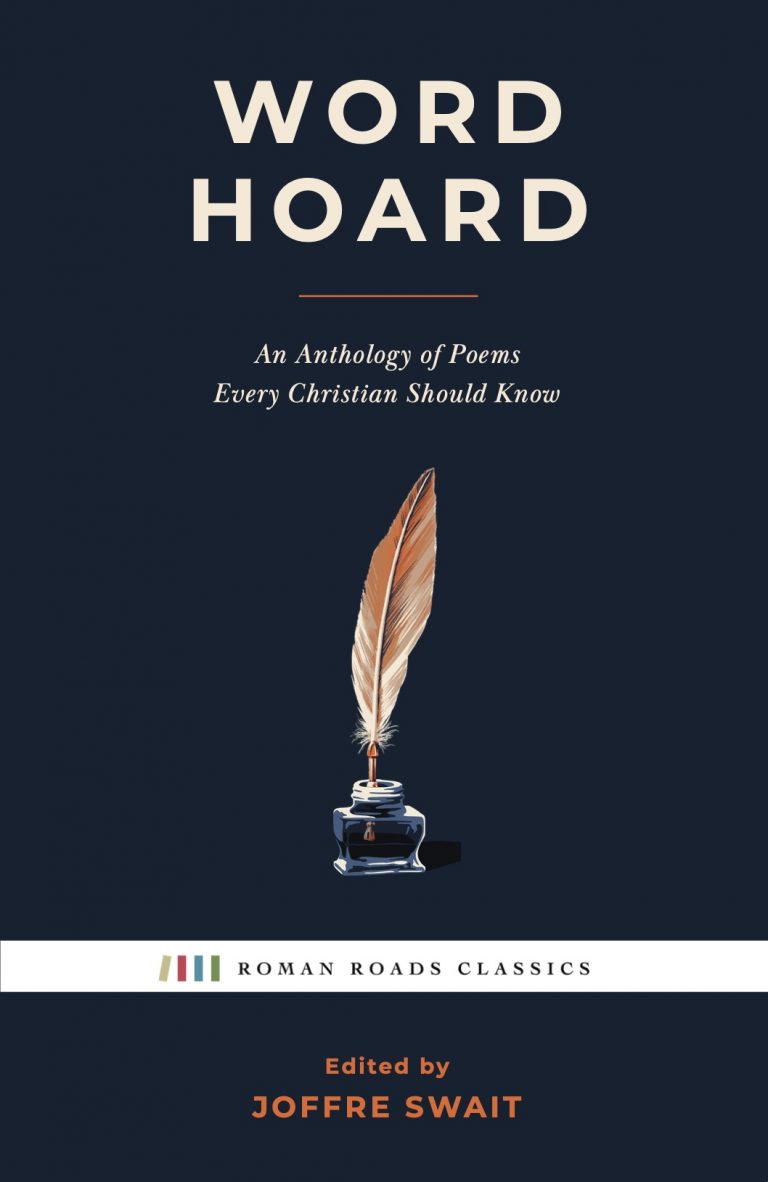
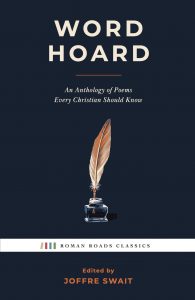
Word Hoard
An Anthology of Poems Every Christian Should Know
Edited, with introductions, by Joffre Swait
Not a collection of Christian poetry, but a Christian collection of poetry: the poems every English-speaking Christian should know.
Love bade me welcome: yet my soul drew back,
Guilty of dust and sin.
But quick-eyed Love, observing me grow slack
From my first entrance in,
Drew nearer to me, sweetly questioning
If I lacked any thing.
About the book
A Christian collection of poetry
THE WORD HOARD ANTHOLOGY is intended to be a Christian collection of poetry. Not a collection of Christian poetry, but a Christian collection of poetry. These are poems that every English-speaking Christian should know.
This is not a collection designed for someone hoping to get the whole modernist poetic canon, the poems the world wishes to acknowledge as important in progressing to our moment in history. Although godless poets and poems have been included, everything here points toward God or toward man’s end without God. In other words, the beauty of the poems turns us toward the transcendent.
As English speakers, we have an incredible poetic heritage. We come from a people who mightily and manfully valued verbs and verse. If we desire to preserve and recover that heritage, we must begin by knowing it. So tolle lege, pick up and read, Western Christian.
Inside
Six centuries of English verse
The poets come in the order they were born, century by century, with an introduction to each.
It accompanies Word Hoard: The Rhetoric of Poetry, whose Teacher’s Guide sets out the readings.
Contents
The poets and their poems
Century by century, each poet in the order of their birth.
- 15th Century & Earlier4 poets
- 16th Century9 poets
- 17th Century9 poets
- 18th Century3 poets
- 19th Century29 poets
- 20th Century14 poets
Show every poet and poemHide the poems
- Introduction
15th Century & Earlier
- Robert Mannying (1288–1338)
- Praise of Women
- Geoffrey Chaucer (1340–1400)
- Balade
- John Lydgate (1370–1450)
- Vox ultima crucis
- William Dunbar (1465–1520)
- Lament for the Makers (Timor mortis conturbat me)
16th Century
- Walter Raleigh (1552–1618)
- Even Such Is Time
- The Nymph’s Reply to the Shepherd
- The Passionate Man’s Pilgrimage
- Edmund Spenser (1552–1618)
- Amoretti LXVIII: Most Glorious Lord of Life
- Amoretti LXXV: One Day I Wrote her Name
- Philip Sidney (1554–1586)
- Leave me, O Love, which reachest but to dust
- Psalm XI. In Domino confido.
- Psalm XIII. Usque quo, Domine?
- Mary Sidney Herbert (1561–1621)
- Psalm XCVIII. Cantate Dominum.
- Psalm CX. Dixit Dominus.
- Psalm CXXXIV. Ecce nunc.
- Henry Constable (1562–1613)
- On the Death of Sir Philip Sidney
- Michael Drayton (1563–1632)
- Ballad of Agincourt
- Christopher Marlowe (1564–1593)
- The Passionate Shepherd to His Love
- William Shakespeare (1564–1616)
- Ariel’s Song (Full Fathoms Five) from The Tempest
- Sonnet XVIII: Shall I compare thee to a summer’s day
- Sonnet LV: Not marble, nor the gilded monuments
- Sonnet CVI: When in the chronicle of wasted time
- Sonnet CXVI: Let me not to the marriage of true minds
- Sonnet CXXX: My mistress’ eyes are nothing like the sun
- Chidiock Tichborne (1568–1586)
- Tichborne’s Elegy (My prime of youth is but a frost of cares)
17th Century
- John Donne (1573–1631)
- Song (Go and catch a falling star)
- A Burnt Ship
- Holy Sonnet V: I am a little world made cunningly
- Holy Sonnet VII: At the round earth’s imagined corners
- Holy Sonnet X: Death be not proud
- Holy Sonnet XIV: Batter my heart
- Holy Sonnet XVII: Since she whom I loved hath paid her last debt
- A Hymn to God the Father
- William Drumond (1585–1649)
- Change Should Breed Change
- Robert Herrick (1591–1674)
- To the Virgins, to Make Much of Time
- Neutrality Loathsome
- Upon a Child that Died
- Cherry-Ripe
- To Violets
- Delight in Disorder
- Upon His Departure Hence
- George Herbert (1593–1632)
- Love (Love bad me welcome)
- The Windows
- Easter Wings
- The Pulley
- Redemption
- Discipline
- The Elixir
- John Milton (1608–1674)
- Hymn on the Morning of Christ’s Nativity
- Sonnet XVIII: Avenge, O Lord, Thy slaughtered saints
- Sonnet XIX: On His Blindness
- Sonnet XXIII: Methought I saw my late espoused saint
- Anne Bradstreet (1612–1672)
- To My Dear and Loving Husband
- A Letter to her Husband, absent upon Publick employment
- Verses upon the Burning of our House, July 10th, 1666
- Richard Lovelace (1618–1658)
- To Lucasta, Going to the Wars
- Thomas Traherne (1636–1674)
- The Salutation
- Shadows in the Water
- On Leaping Over the Moon
- A Serious & Pathetical Contemplation of the Mercies of God
- Edward Taylor (1642–1729)
- Huswifery
- I am the Living Bread: Meditation Eight, John 6:51
- Upon a Wasp Chilled with Cold
18th Century
- John Scott of Amwell (1730–1783)
- Retort on the Foregoing
- William Cowper (1731–1800)
- Light Shining Out of Darkness
- Epitaph on a Hare
- On the Loss of the Royal George
- William Blake (1757–1827)
- Jerusalem (And did those feet in ancient time)
- The Sick Rose
- A Poison Tree
- The Tyger
- The Lamb
- Mock On, Mock On, Voltaire, Rousseau
19th Century
- William Wordsworth (1770–1850)
- On the Extinction of the Venetian Republic, 1802
- London, 1802
- I Wandered Lonely as a Cloud
- The World is Too Much With Us
- Surprised By Joy
- Walter Scott (1771–1832)
- Lucy Ashton’s Song
- Proud Maisie
- Lochinvar from Canto V of Marmion
- Samuel Taylor Coleridge (1772–1834)
- Kubla Khan
- On Donne’s Poetry
- Something Childish, but Very Natural
- On Receiving a Letter Informing Me of the Birth of a Son
- Whom should I choose for my Judge?
- Religious Musings: A Desultory Poem Written On The Christmas Eve of 1794
- George Gordon Byron, Lord Byron (1788–1824)
- She Walks in Beauty
- The Destruction of Sennacherib
- Charles Wolfe (1791–1823)
- The Burial of Sir John Moore After Corunna
- Percy Bysshe Shelley (1792–1822)
- Ozymandias
- Hellas: Chorus
- John Keats (1795–1821)
- If By Dull Rhymes Our English Must Be Chain’d
- Ode on a Grecian Urn
- To Autumn
- La Belle Dame sans Merci: A Ballad
- On First Looking into Chapman’s Homer
- When I Have Fears That I May Cease To Be
- Elizabeth Barrett Browning (1806–1861)
- Grief
- Henry Wadsworth Longfellow (1807–1882)
- The Arrow and the Song
- Paul Revere’s Ride
- Ultima Thule
- The Bells of San Blas
- The Challenge of Thor, from The Musician’s Tale: The Saga of King Olaf
- Edgar Allan Poe (1809–1849)
- Annabel Lee
- The Bells
- The Raven
- Sonnet—To Science
- Alfred, Lord Tennyson (1809–1892)
- The Lady of Shalott
- The Charge of the Light Brigade
- Blow, Bugle, Blow
- Break, Break, Break
- The Eagle
- The Kraken
- Ulysses
- In Memoriam A.H.H. 54 (Oh yet we trust that somehow good)
- William Makepeace Thackeray (1811–1863)
- Persicos Odi
- Robert Browning (1812–1899)
- Love Among the Ruins
- Childe Roland to the Dark Tower Came
- Matthew Arnold (1822–1888)
- Requiescat
- Dover Beach
- George MacDonald (1824–1905)
- That Holy Thing
- Emily Dickinson (1830–1866)
- A Man May Make a Remark
- Hope is the Thing With Feathers
- I’m Nobody! Who Are You?
- There is No Frigate Like a Book
- Because I Could Not Stop for Death
- There’s a Certain Slant of Light
- Christina Rossetti (1830–1898)
- Uphill
- Goblin Market
- Lewis Carroll, Charles Lutwidge Dodgson (1832–1898)
- Jabberwocky
- Bret Harte (1836–1902)
- What the Bullet Sang
- Thomas Hardy (1840–1928)
- The Man He Killed
- Channel Firing
- The Respectable Burgher on “The Higher Criticism”
- In Time of “The Breaking of Nations”
- Arthur William Edgar O’Shaughnessy (1844–1881)
- Ode (We are the music makers)
- Gerard Manley Hopkins (1844–1889)
- Heaven-Haven: A Nun Takes the Veil
- The Windhover
- Pied Beauty
- That Nature is a Heraclitean Fire & of the Comfort of the Resurrection
- Felix Randal
- Spring and Fall
- “No worst, there is none. Pitched past pitch of grief.”
- It was a hard thing to undo this knot
- As Kingfishers Catch Fire
- God’s Grandeur
- I Wake and Feel the Fell of Dark, Not Day
- Carrion Comfort
- “Thou art indeed just, Lord, if I contend”
- Francis William Bourdillon (1852–1921)
- The Night Has a Thousand Eyes
- Alfred Edward Housman (1859–1936)
- To an Athlete Dying Young
- When I Was One-and-Twenty
- A Shropshire Lad, XL (Into my heart an air that kills)
- Epitaph on an Army of Mercenaries
- I Did Not Lose My Heart in Summer’s Even
- A Shropshire Lad, LXII (Terence, this is stupid stuff)
- Francis Thompson (1859–1907)
- Hound of Heaven
- Mary Elizabeth Coleridge (1861–1907)
- Unwelcome
- Rudyard Kipling (1865–1936)
- Recessional
- Danny Deever
- If—
- “Tin Fish”
- William Butler Yeats (1865–1939)
- The Lake Isle of Innisfree
- Sailing to Byzantium
- The Song of Wandering Aengus
- An Irish Airman Foresees His Death
- The Second Coming
- Leda and the Swan
- Edwin Arlington Robinson (1869–1935)
- Miniver Cheevy
- The Sheaves
- The Dark Hills
- Villanelle of Change
20th Century
- Gilbert Keith Chesterton (1872–1936)
- By the Babe Unborn
- The Donkey
- Elegy in a Country Churchyard
- The Wise Men
- The Ballad of God-Makers
- Modern Elfland
- Lepanto
- Robert Frost (1874–1963)
- Stopping by Woods on a Snowy Evening
- Fire and Ice
- The Road Not Taken
- After Apple-Picking
- Acquainted with the Night
- John Masefield (1878–1967)
- Cargoes
- Carl Sandburg (1878–1967)
- Chicago
- River Roads
- Fog
- Grass
- Prayers of Steel
- The Lawyers Know Too Much
- Honky Tonk in Cleveland, Ohio
- Ezra Pound (1885–1972)
- In a Station of the Metro
- The River-Merchant’s Wife: A Letter
- Ballad of the Goodly Fere
- Siegfried Sassoon (1886–1967)
- Attack
- Everyone Sang
- Rupert Brooke (1887–1915)
- The Soldier
- Thomas Stearns Eliot (1888–1965)
- The Love Song of J. Alfred Prufrock
- The Boston Evening Transcript
- Journey of the Magi
- The Hollow Men
- The Hippopotamus
- The Naming of Cats
- Macavity: The Mystery Cat
- Choruses from “The Rock”
- Wilfred Owen (1893–1918)
- Anthem for Doomed Youth
- Dulce et Decorum est
- Wystan Hugh Auden (1907–1973)
- Musée des Beaux Arts
- The Shield of Achilles
- The Unknown Citizen
- Under Which Lyre
- Louis MacNiece (1907–1963)
- Bagpipe Music
- Plurality
- I Am That I Am
- Stephen Spender (1909–1995)
- The Truly Great
- Dylan Thomas (1914–1953)
- Do Not Go Gentle Into That Good Night
- John Gillespie Magee Jr. (1922–1941)
- High Flight

The editor
Joffre Swait
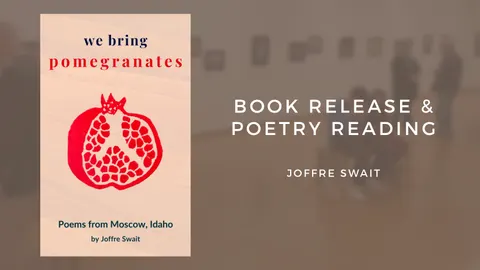
Joffre Swait, also known as Joffre the Giant, lives in Idaho with his wife and five children. He is the author of two poetry collections, Well Met: Poems of Companionship, and Made In the Image: Plain Poems, and is co-author of Christian Pipe-Smoking: an Introduction to Holy Incense. Joffre has a deep love for the poetry of the West, and is more ambivalent about the Norman invasion than Tolkien was. He is also the author of Word Hoard: The Rhetoric of Poetry, published by Roman Roads Press.

The course that goes with it
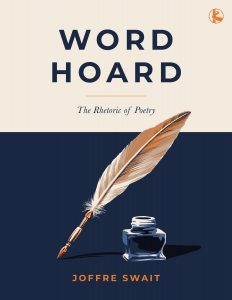
See the courseWord Hoard: The Rhetoric of Poetry
A course in poetry for upper high school and early college: rhythm and meter, poetic forms, figures of speech, composition and performance. This anthology accompanies it.
Publishing information
- Editor and introductions
- Joffre Swait
- Series
- Roman Roads Classics
- Publisher
- Roman Roads Press, 2026
- Format
- 5.5 × 8.5 in, perfect bound · 354 pages
- ISBN
- 978-1-963505-29-0
Word Hoard
$28.95 · Print edition includes the eBook