
Background to the Project
We are pleased to announce a project we have been working on for over two years, yet planning for much longer than that. What sets Old Western Culture apart from other great books curricula is that it is a guide through the great books, while remaining focused on the great books themselves. It is the pitfall of many curricula to become inserted between the student and the text, which is an overcorrection from the intellectual and spiritual dangers of reading the great books in isolation, without a guide.
Old Western Culture is different. There is context and analysis, presented from a thoroughly Christian and historical perspective. Instead of distracting from (or worse, replacing) the great books, it comes along side you, like a friend introducing you to someone great. The gaze is outward, not inward; toward the past, not the latest hot-take of the present.
We accomplish this through narrative-based video lectures. Old Western Culture represents a concrete inheriting of the Humanities, but it also feels like inheriting the humanities because it’s told like a grandfather telling stories to his grandchildren.
And yet there remained one significant drawback: These lectures are digital. They go by fast. And it is difficult to truly appreciate some of the surrounding context and rabbit trails, and especially the large quantities of artwork, as they go by on screen. You cannot hold and touch and linger in contemplation at a screen that is moving by at a set pace. In the early years, we addressed part of this by creating our Guide to the Art booklets. However, these were designed for DVD cases, and only shipped with our DVDs (which will soon be discontinued). Now, nearly all of our clients use our streaming app, and that does not ship with a Guide to the Art.
Our most common request from clients over the years has been: Can you bring back the Guide to the Art booklets! Well…we have something far, far better!
INTRODUCING THE
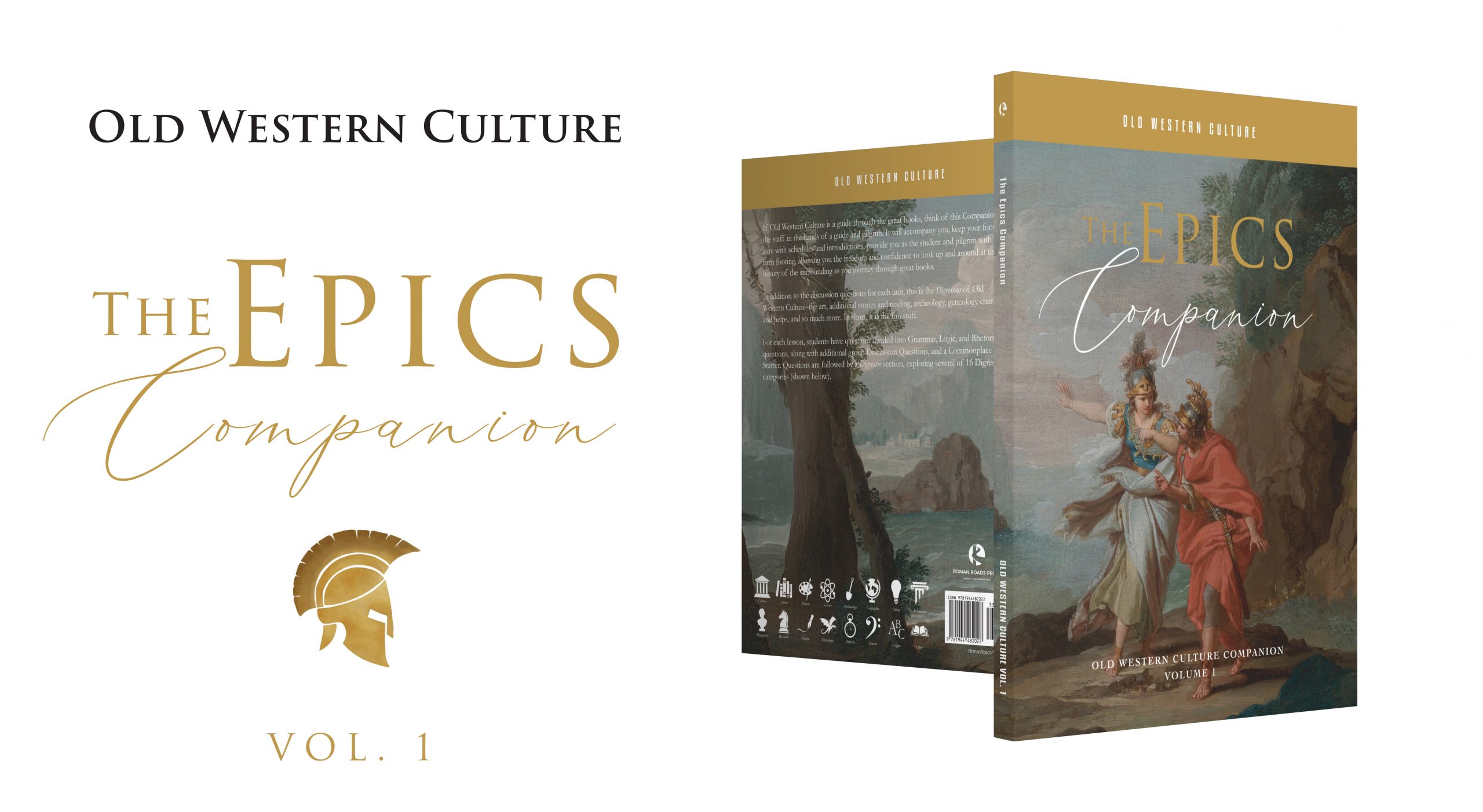
All the wonder, all the “Digressios,” all the fun, all the artwork, built on the Old Western Culture foundation. The Old Western Culture Companions are NOT the “textbook version” of Old Western Culture. They are truly a companion to the great books themselves and to the Old Western Culture lectures. The lectures still form the backbone of the curriculum.
We approached development of The OWC Companions with three principles in mind:
- Remain text centric. We didn’t want to write another textbook that distracts from or takes the focus away from the great books. The great books remain front and center.
- No added “homework.” Believe it or not, these Companions do not add any required coursework for students. In fact, the “Essentials Schedule” is now fully integrated into the new Companions such that it is easier to do the Apex or slow read (“more is less”) approach. There is more students can read, but the core assignments remain the same.
- Focus on Delight. The majority of the pages of the OWC Companion are focused on wonder, delight, and exploration of the classical texts covered in Old Western Culture, through art, architecture, trivia, archeology, mythology, music, language, and even the occasional classical crossword puzzle.
If the Old Western Culture Companions are not a textbook, then what are they? Each of the 16 units of Old Western Culture will have it’s own Companion, and each will include:
- An Introduction to the unit
- Both Honors and Essentials Schedule with suggested daily work
- Questions on the reading and lecture, and now divided into Grammar, Logic, Rhetoric, and Discussion questions. This new division is useful in several ways, including classrooms that include multiple grade-levels. 7-9th graders can focus on Grammar and Logic level questions, and 11-12 graders can focus on Rhetoric questions and Discussion questions.
- Grammar Questions: Basic comprehension of the reading and lectures.
- Logic Questions: Integrating knowledge from the text, making connections, and drawing conclusions.
- Rhetoric Questions: Integrating not only from the text but other readings from the unit, from previous units of Old Western Culture, knowledge of the Bible, cultural and theological knowledge and synthesis.
- Discussion Questions: these are the questions for which we do not provide an answer in the Answer Key. These are some of the grand questions that an entire generation might ponder, worthy of discussion or even student papers, and often don’t have a straightforward answer.
- Commonplace guide and starts: We want our students keeping a commonplace book, and we give 2 commonplaces per lesson to jump start and allow students to learn by imitation.
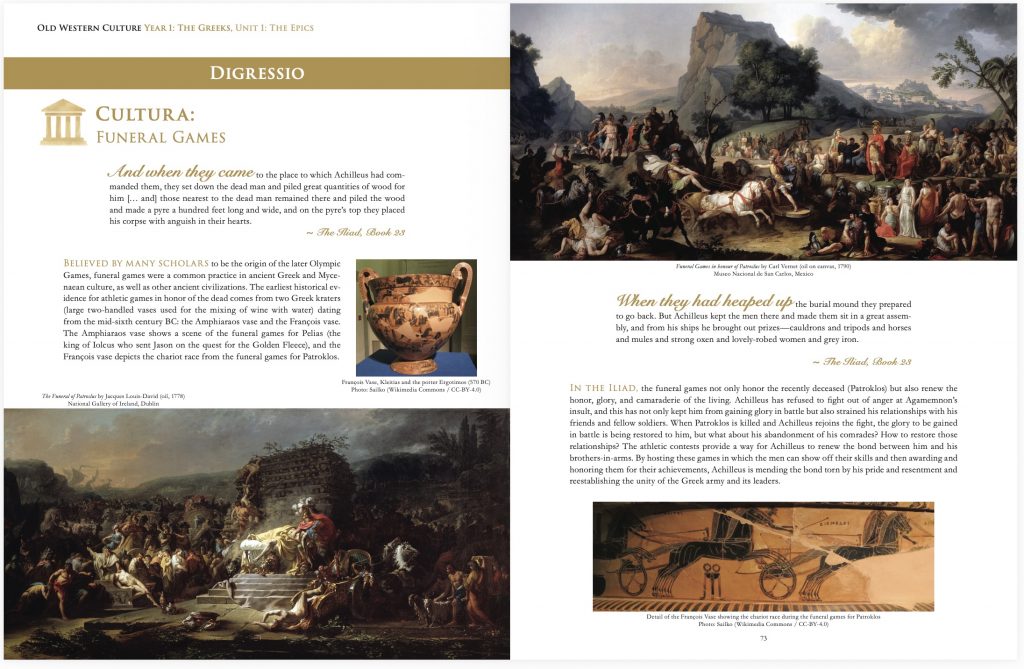
- Digressios. This is the core of the Old Western Culture Companion. A “digression” is a medieval teaching technique which could be summed as saying “The Rabbit Trail is the point!” It’s the story, side-trail, anecdote along the way that serves as a hook for the imagination and memory. We have divided the category of Digresios into 16 categories which we have given Latin names: Literae, Recreatio, Trivia, Scientia, Architectura, Cultura, Geographia, Biographia, Liber, Archeologia, Poetica, Pictura, Mythologia, Musica, Historia, and Lingua. Each lesson will feature several of these categories, exploring art, architecture, music, culture, archaeology, and much more!

Table of Contents for Unit 1: The Epics
This is a PHYSICAL and FULL color text!
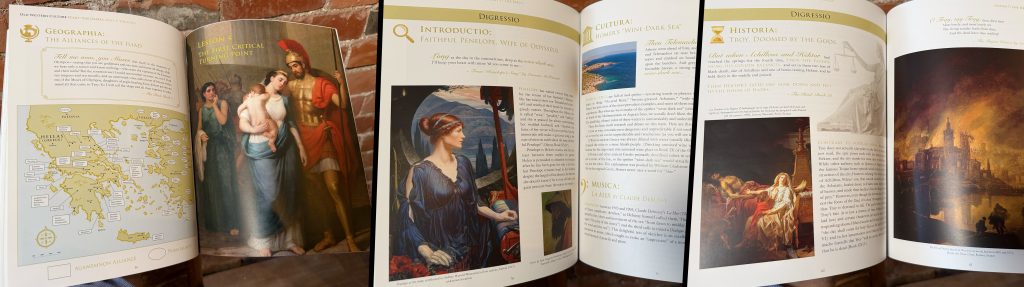
In the age of digital media, on-demand subscriptions, and temporary content, of AI images and bots vying for your attention and imagination, we offer our favorite technology: the permanent printed word, and ink-saturated printed artwork in full, vibrant color. These are books that have weight, quite literally as well as figuratively.
With the physical text as foundation, we also have additional digital resources, like music integration, supplemental videos, audiobooks, and art included with the Companions on our app.
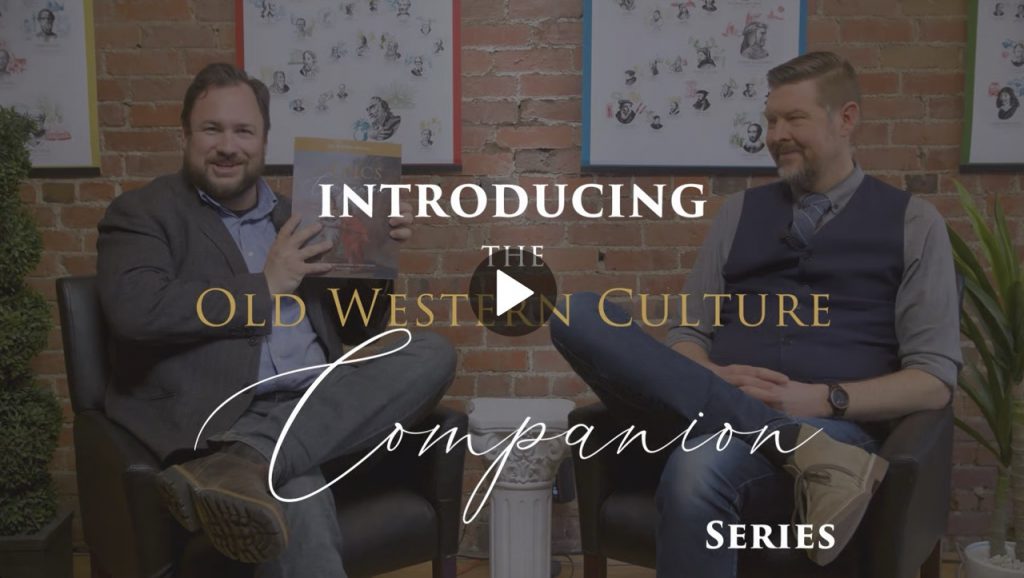
WATCH: Daniel Foucachon and Joe Carlson Discuss the Companions
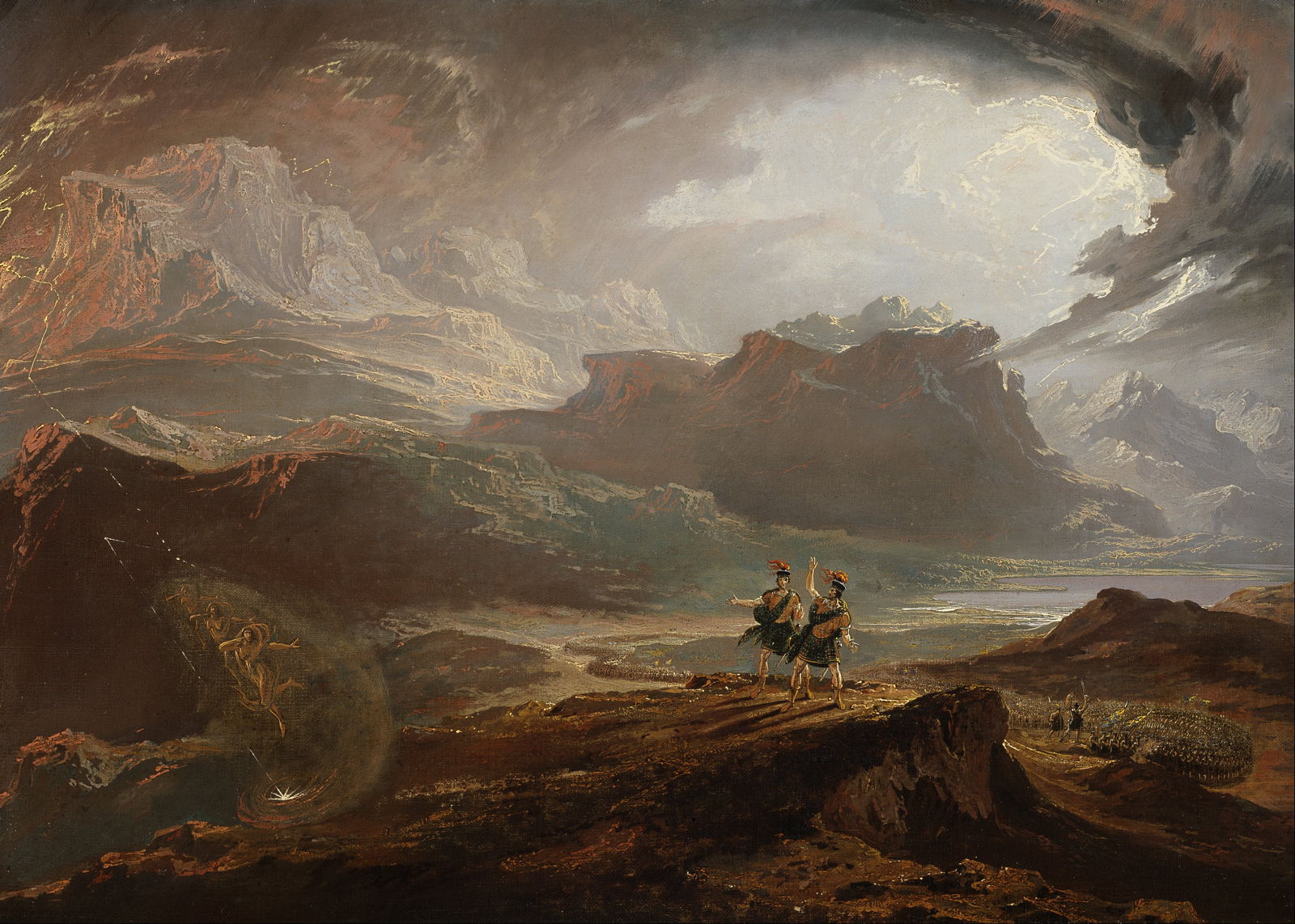
MAKE OLD WESTERN CULTURE PART OF YOUR HOUSEHOLD
New to Old Western Culture?
Step 1: PURCHASE THE BASE CURRICULUM for The Greeks (year 1, full year) or a standalone single unit from The Greeks. Note: legacy workbooks are included for free with your purchase in PDF format. We recommend skipping the physical print editions of the workbooks in favor of the new Companion.
-
Greeks: The Epics
Price range: $63.54 through $112.84 -
Greeks: Drama and Lyric
Price range: $63.54 through $112.84 -
Greeks: The Histories
Price range: $63.54 through $112.84 -
Greeks: The Philosophers
Price range: $63.54 through $112.84 -
Old Western Culture: The Greeks
Price range: $239.20 through $466.40


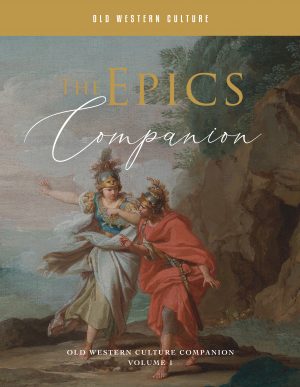
Step 2: PURCHASE THE NEW COMPANION. The Epics will ship early summer, and the following 3 units will ship to those who pre-order roughly every two months following.
-
Volume 1: The Epics Companion
Original price was: $39.00.$29.25Current price is: $29.25. -
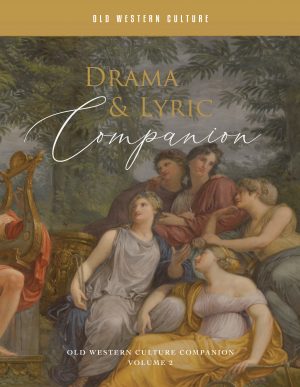
Volume 2: Drama and Lyric Companion
Original price was: $39.00.$29.25Current price is: $29.25. -
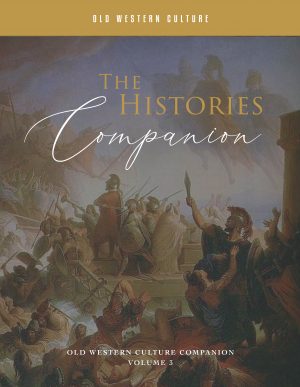
Volume 3: The Histories Companion
Original price was: $39.00.$29.25Current price is: $29.25. -
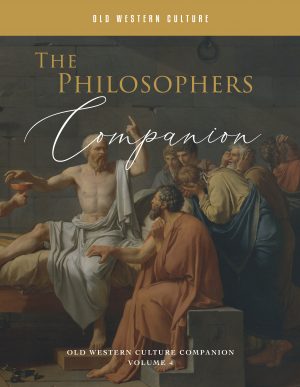
Volume 4: The Philosophers Companion
Original price was: $39.00.$29.25Current price is: $29.25. -
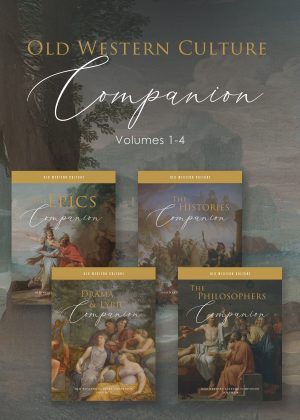
Old Western Culture Companion: The Greeks Set
Original price was: $156.00.$117.00Current price is: $117.00.
Veteran Old Western Culture Family?
If you are going through The Greeks this coming year, you are in time to use our new Companions for The Greeks! If you are doing The Romans (year 2), Christendom (year 3), or Early Moderns (year 4), the Companions won’t be ready in print for 2026 school year, and you will want to use the existing PDF or Print workbooks. However, make sure and sign up for our Advance Reader Program for the Old Western Culture Companions, and we will be sending extended samples of our OWC Companions that are in development! This will augment, at no additional charge, years 2-4 of Old Western Culture. The only thing we ask in return is the occasional feedback in the form of a survey.
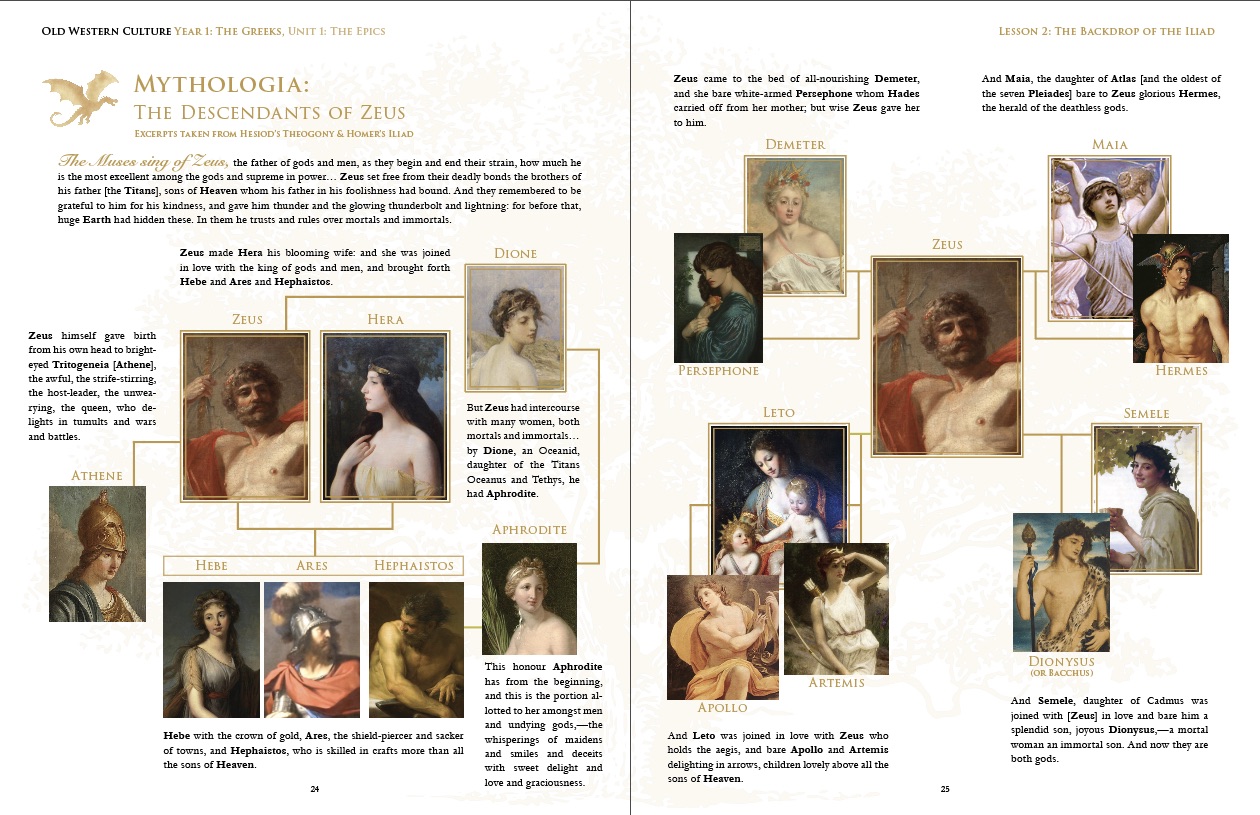
OWC Companion: Overview of all 16 volumes
YEAR 1: THE GREEKS
Available for the 2026/2027 school year.
Unit 1: The Epics—Homer’s two great poems, the Iliad and the Odyssey.
Unit 2: Drama and Lyric—the works of the great Greek tragedians,
Unit 3: The Histories—Herodotus’ and Thucydides’ tellings of the great Greek wars.
Unit 4: The Philosophers—Plato and Aristotle’s foundational texts of western philosophy.
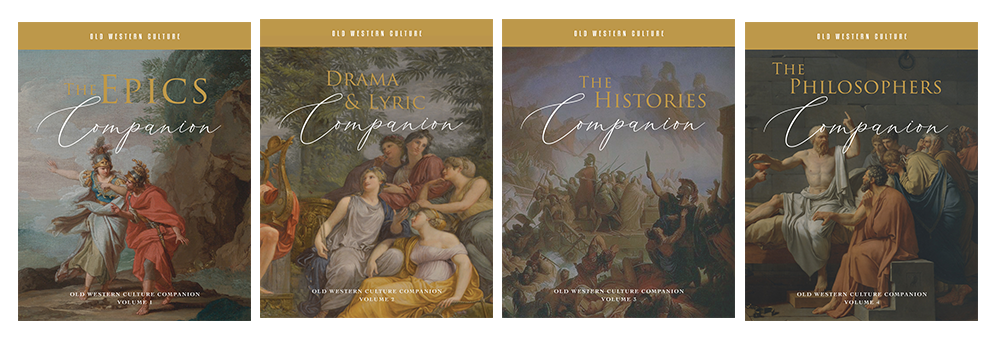
YEAR 2: THE ROMANS
Available starting in 2027:
Unit 1: The Aeneid—Vergil’s classic epic poem.
Unit 2: The Historians—the works of Roman historians such as Livy, Plutarch, and Sallust.
Unit 3: Early Christianity—the works of early church fathers such as Ignatius, Justin Martyr, and Irenaeus.
Unit 4: Nicene Christianity—the works of Nicene church fathers such as Athanasius, Chrysostom, and Augustine.
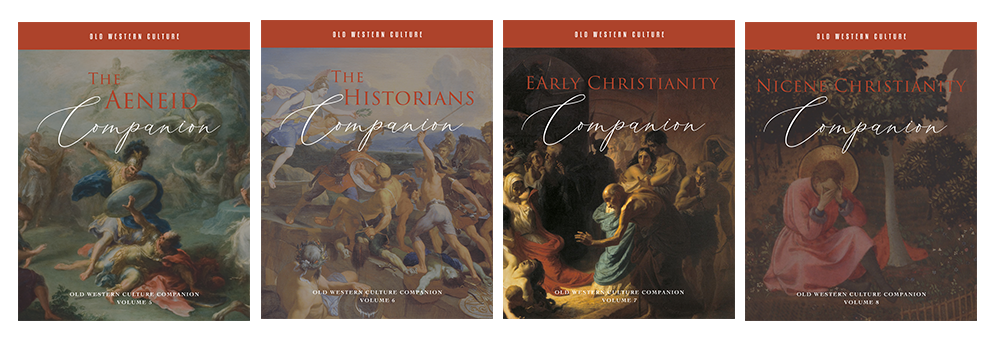
YEAR 3: CHRISTENDOM
Under development
Unit 1: Early Medievals—works from the early medieval period such as The Rule of Saint Benedict, Ecclessiastical History of the English People, and Beowulf.
Unit 2: Defense of the Faith—works by Christian authors from the high Middle Ages such as Anselm of Canterbury, Geoffrey of Monmouth, and Jacobus de Voragine.
Unit 3: The Medieval Mind—an abridgement of Thomas Aquinas’ Compendium and the entire Divine Comedy by Dante Alighieri.
Unit 4: The Reformation—a wide selection of Reformation and Renaissance era works ranging from Luther’s Ninety-Five Theses to The Faerie Queene by Edmund Spenser.
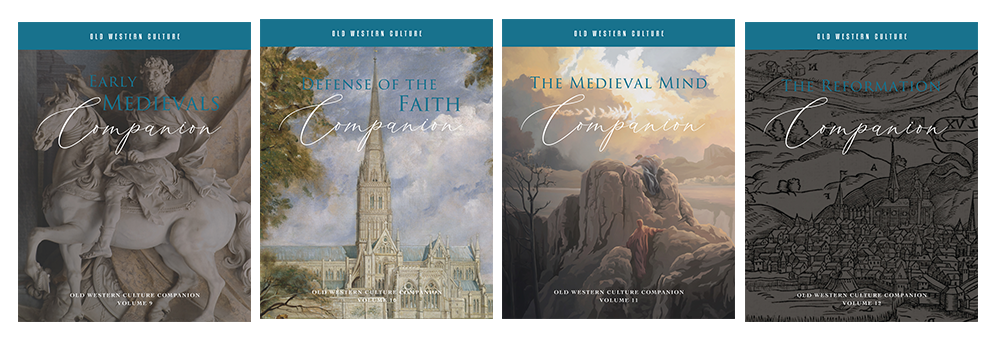
YEAR 4: EARLY MODERNS
Under development
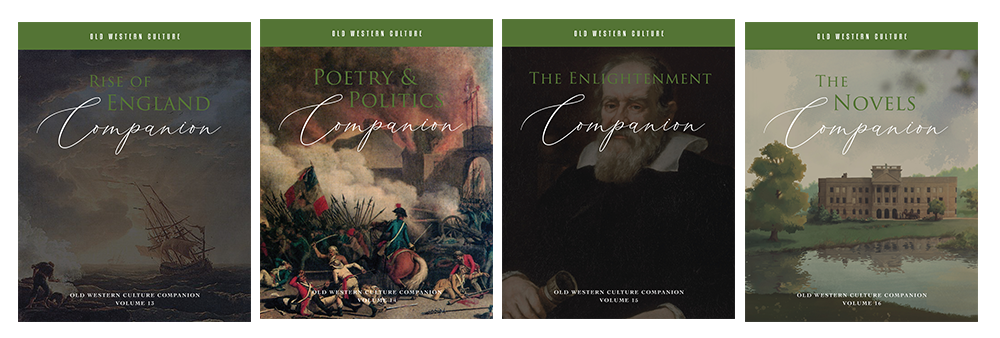
Unit 1: Rise of England—The epic poem of John Milton, and an exploration of the plays of Shakespeare
Unit 2: Poetry and Politics—The poetry of Pope, Coleridge, Wordsworth, Byron, Keats, Shelley, Tennyson, Browing, Arnold, Rossetti, Hopkins, and Poe. Explore the political treatises of Edmund Burke and Alexis de Tocqueville.
Unit 3: The Enlightenment—The search for certainty through the works of Galileo, Descartes, Newton, Hume, Kant, and Reid
Unit 4: The Novels—The great novels of Austen, Dickens, Dostoevsky, Lewis, and Tolkien
FAQ
When will the Old Western Culture Companion be available?
The Greeks will be shipping this Fall, and is available for pre-order now!
Unit 1: The Epics: Ready to ship by end of June.
Unit 2-4: Will ship on roughly a 2-3 month interval after that, in plenty of time for students to use the text for the 2026/2027 school year.
The Romans, Christendom, and Early Moderns are under development, and will be available starting in 2027.
Is the Old Western Culture Companion a consumable text?
Not in the sense of a workbook you write in and use up. However, like all our books, we encourage students to own their own copy, write in the margins, and make them their own treasured possession for life! These are beautiful, full-color, coffee-table-worthy books designed to last a lifetime.
Does the Old Western Culture Companion replace the current Workbooks?
Yes. The current workbooks will continue to be available for a time in print, and will always be included as a legacy product in PDF. But the Companion is a full replacement (and major upgrade) to the Workbooks.
Is this intended for homeschool or schools?
Yes!
For homeschools: Paired with the video lectures, the Companion enhances the Old Western Culture experience in every way: more questions (divided by level to facilitate various ages), a tangible connection point to the curriculum, digressios to explore individually or as a family or co-op, a jump-start to the student’s commonplace book, a field-guide for your next museum trip (Going to The Met or Louvre? Bring your Companion along, and see how many paintings you can find in real life!), and an art and conversation piece for the living room coffee table as a reminder that everything is connected!
For Traditional Schools: 4-5 day schools often prefer to not include technology in the classroom or homework. For that reason, up until now, Old Western Culture has not been a great fit for such schools. The Companion make Old Western Culture compatible with such classrooms, where the live lecture replaces the video lectures. In many cases, teachers will use the video lectures to prepare for class and in-class discussion.
For Hybrid Schools, Co-ops, online schools: The Companion works in a similar way to the homeschooler, but featuring Classical Recitations (using the flipped-classroom model). Student watch the lectures at home, and bring their Companion to class. This allows the more limited live-class time to be focused on discussion, socratic dialogue, working through the questions, and reading aloud. This is where Old Western Culture, enhanced with the Companion, shines, as it was designed with that “flipped classroom” in mind. In this setting, it is our recommendation that the primary homework be watching the video lectures, and enjoying the Digressios ahead of live-class, and let the live class be discussion and as much reading aloud of the primary texts as possible.