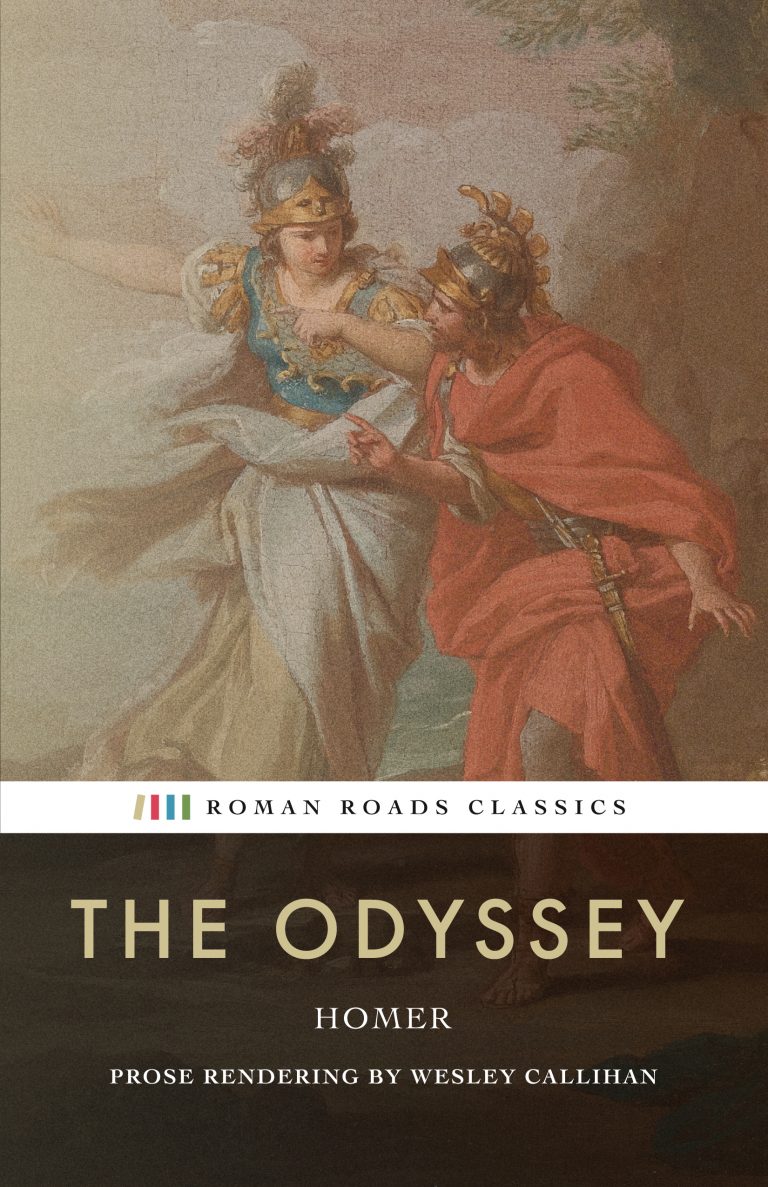
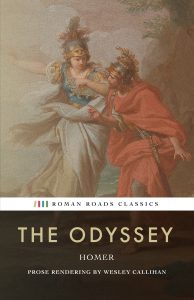
The cover of The Odyssey
Roman Roads Classics

Homer · c. 725 BC · Epic

The Odyssey

Prose rendering by Wesley Callihan

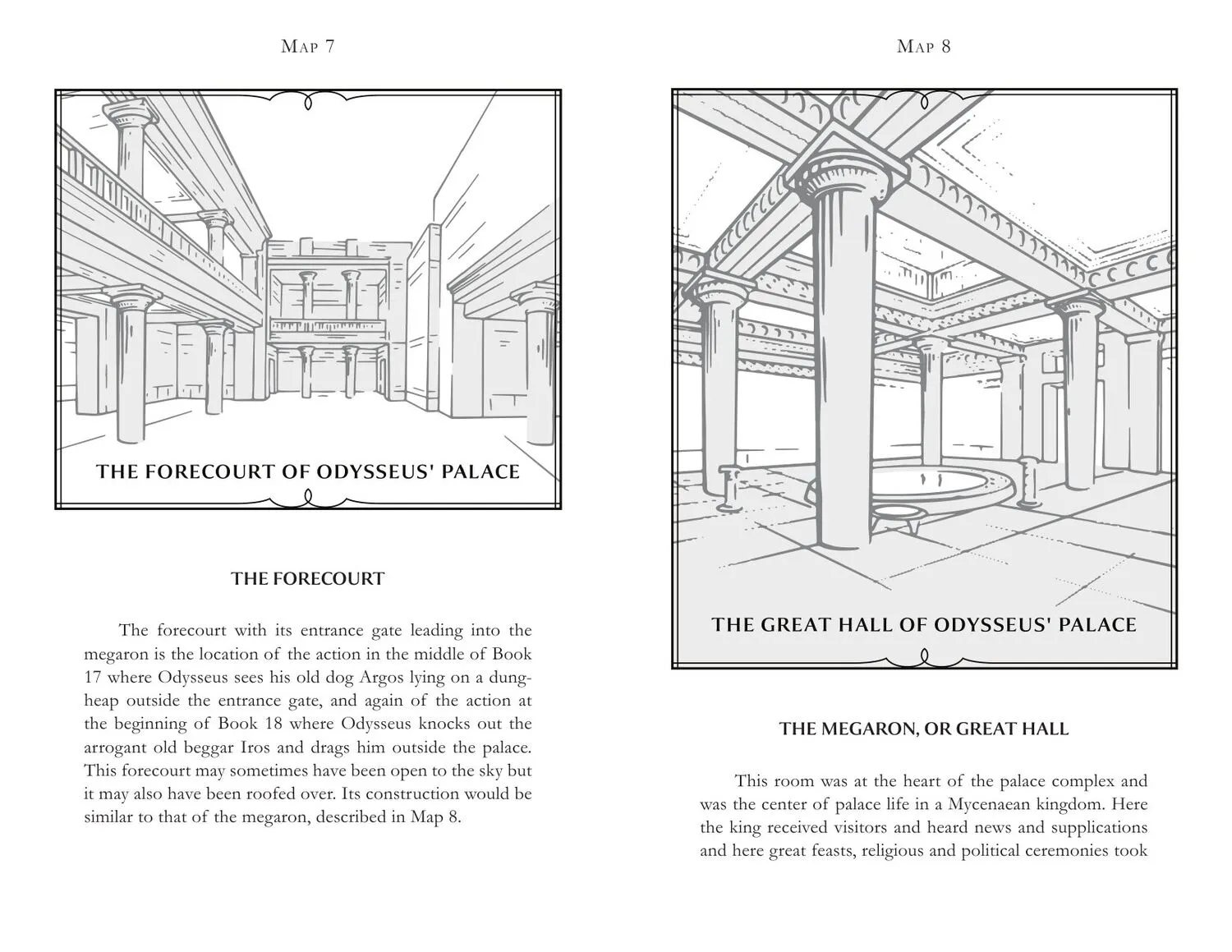
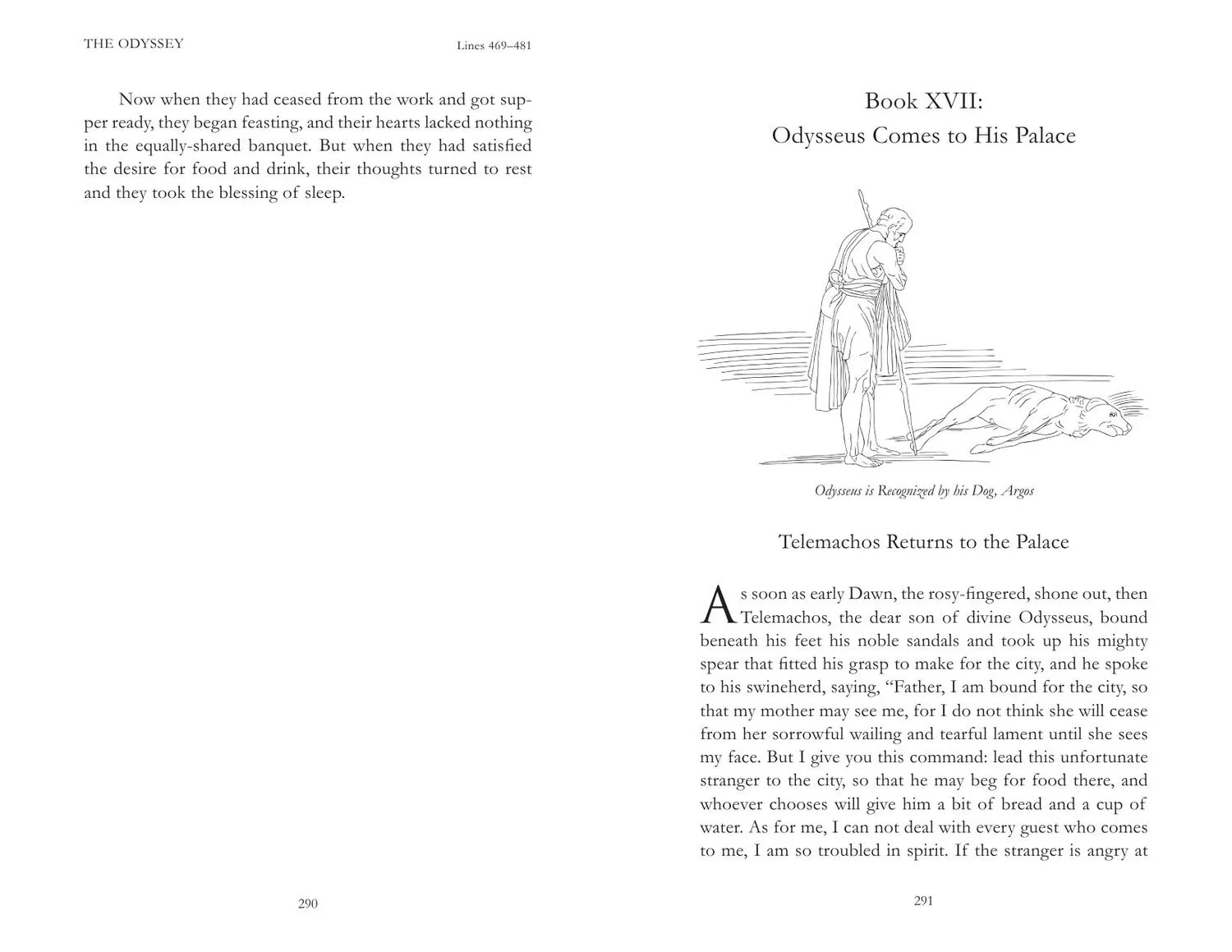
All twenty-four books in a new prose rendering based on Butcher and Lang, with eight maps and plans, a drawing after Flaxman at the head of every book, and notes all through the text.

You’re buyingThe Odyssey | Wesley CallihanPaperback · $27.99Print edition includes the eBook

In stock · Print edition includes the eBook in the Roman Roads app

A slightly dinged copy is available for $19.59
“They hear like Ocean on a western beach The surge and thunder of the Odyssey.”
Andrew Lang, from the sonnet at the front of this edition
About the book

The man of many turnings

This is the companion to Wesley Callihan’s Iliad: the same design, a drawing after Flaxman at the head of every book, the Greek line numbers in the running heads, and an introduction for first-time readers. It is based on the 1879 prose translation of Samuel Butcher and Andrew Lang, revised into contemporary American English. In Callihan’s words: “If the translator pays attention to the rhythm of the words he chooses and how to assemble them, then even if he is not striving for true poetry, he can give his translation a poetic feel. That is what I have attempted to do.”

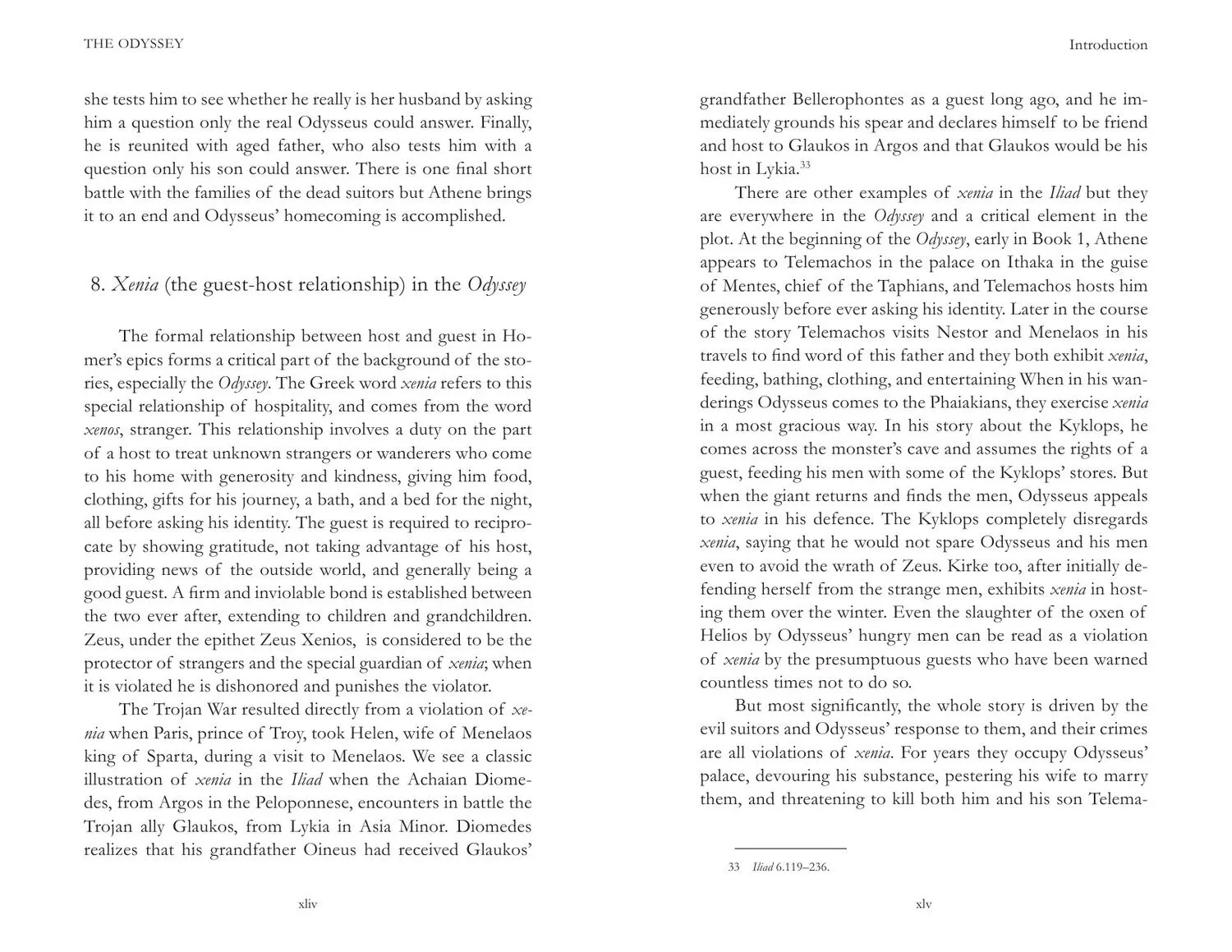
The introduction sets the Odyssey beside the Iliad, follows the poem’s structure and its two threads of story, and gives a section to xenia, the bond between guest and host that holds the poem together. Notes run all through the text, many drawn from the Oxford commentary, beginning with a long one on polytropos, “man of many turnings.” Callihan drafted the text during a year of teaching Homer, finishing each book just ahead of his students’ weekly reading.
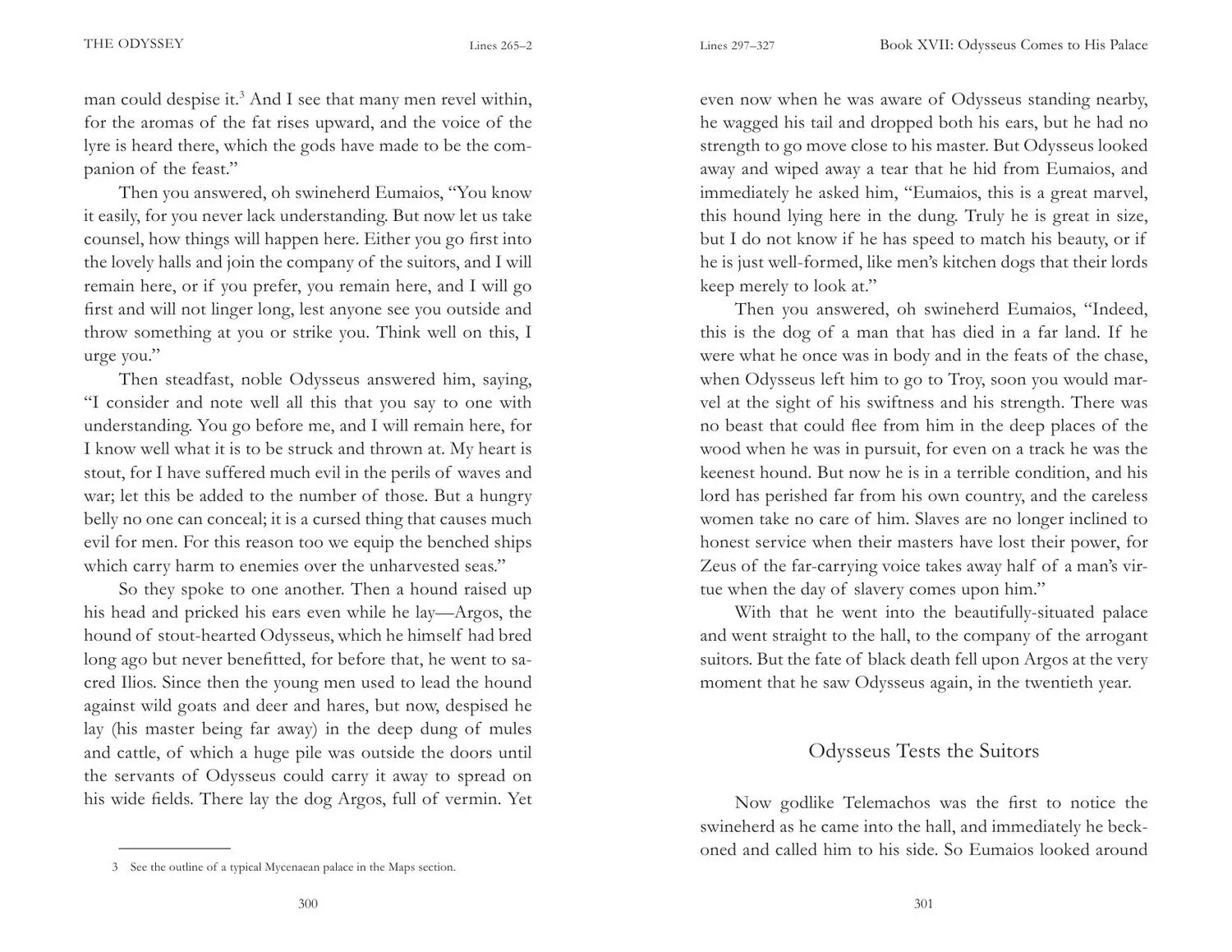
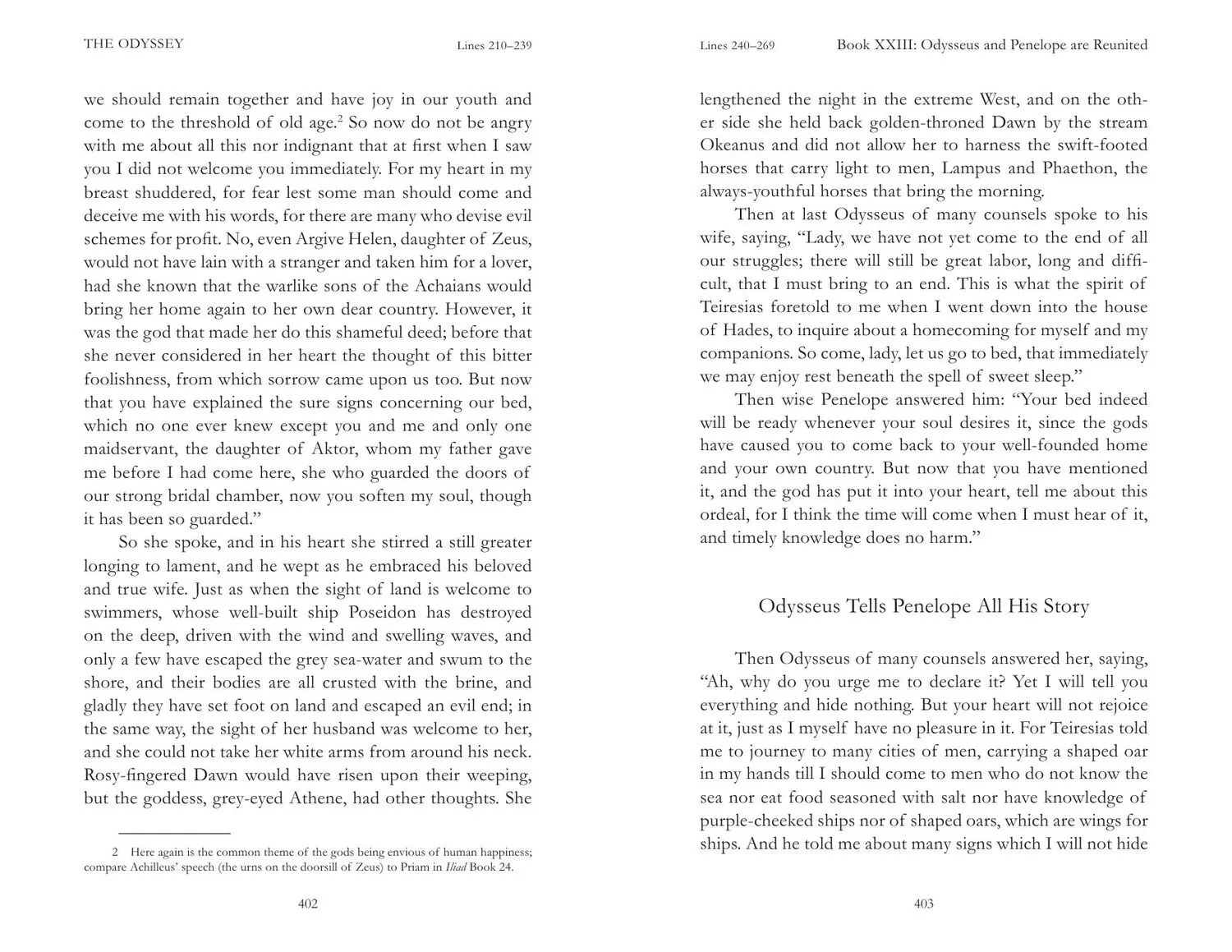
Look inside

The wanderings and the palace

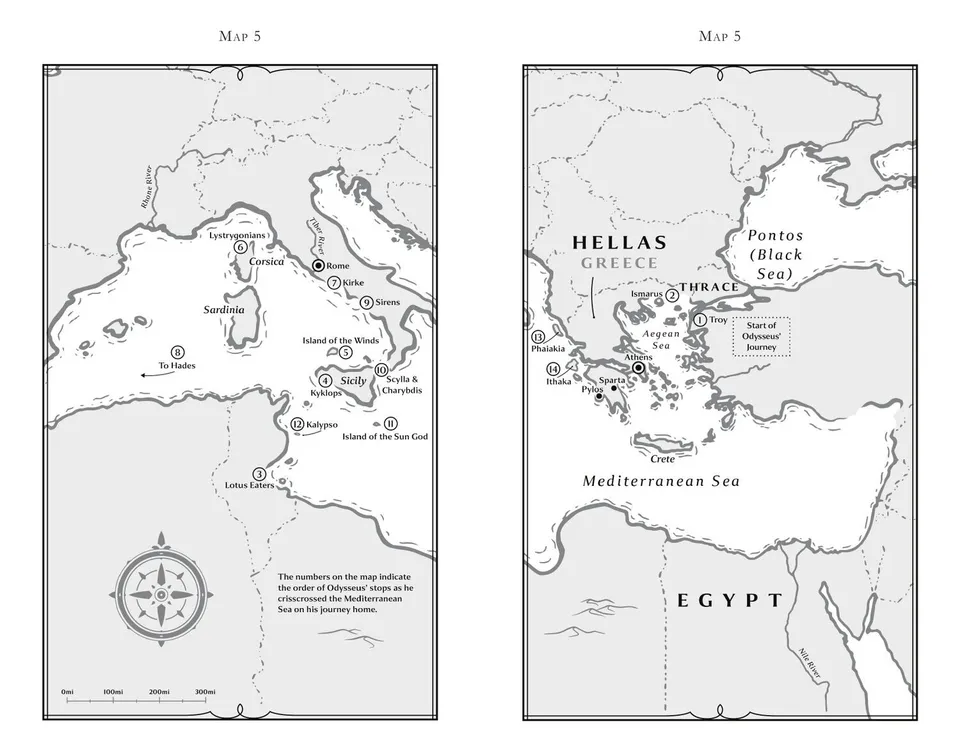
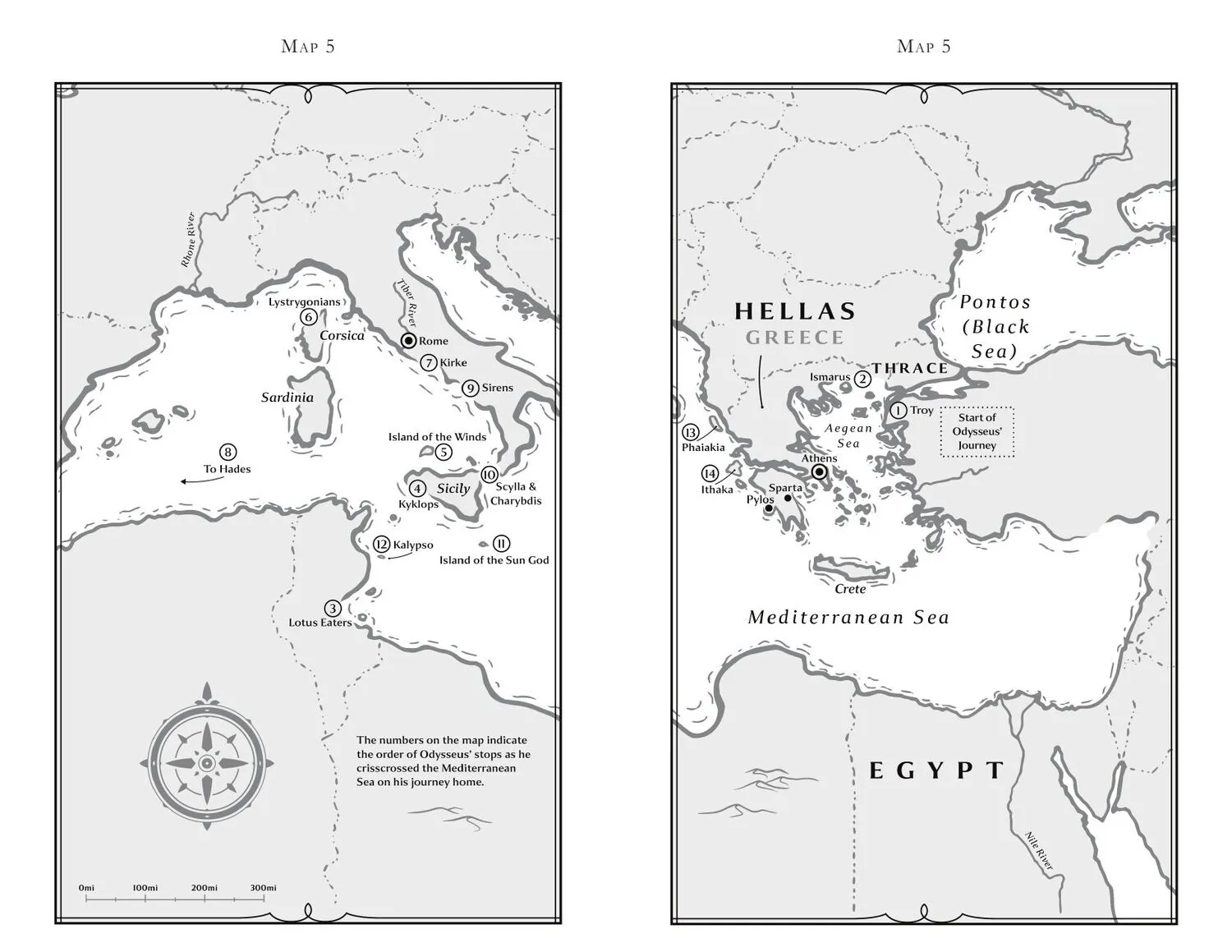
Map 5: the wanderings of Odysseus, pp. lxviii–lxix
Map 5: the wanderings of Odysseuspp. lxviii–lxix · 1 of 6
The full contents24 books · 498 pages
  1. Acknowledgmentsix
  2. Prefacexi
  3. Introductionxiii
  4. The Importance of Homer · The Historical Christian Perspective · The Historical Background of the Story · The Story of the Trojan War · Between the Iliad and the Odyssey · The Form and Context of Homeric Epic · The Contents and Structure of the Odyssey · Xenia in the Odyssey · Major Characters · How to Read the Homeric Epics · What to Read Next · This Version, and Why Another One?
  5. Maps of the Odysseylxi
  6. The Odyssey
  7. Book IAthene Visits Telemachos3
  8. Book IITelemachos Calls an Assembly19
  9. Book IIITelemachos Visits Nestor35
  10. Book IVTelemachos Visits Menelaos53
  11. Book VOdysseus Leaves Kalypso83
  12. Book VINausikaa Finds Odysseus101
  13. Book VIIOdysseus Comes to the Phaiakians113
  14. Book VIIIOdysseus is Hosted by the Phaiakians125
  15. Book IXThe Kikones, Lotus-Eaters, and Kyklops145
  16. Book XThe Bag of Winds, the Laistrygones, and Kirke165
  17. Book XIOdysseus Visits Hades185
  18. Book XIIThe Sirens, Skylla and Charybdis, and the Oxen of Helios207
  19. Book XIIIOdysseus Lands in Ithaka223
  20. Book XIVOdysseus is Hosted by Eumaios239
  21. Book XVTelemachos Returns to Ithaka257
  22. Book XVIOdysseus and Telemachos are Reunited275
  23. Book XVIIOdysseus Comes to His Palace291
  24. Book XVIIIOdysseus Contends with the Suitors311
  25. Book XIXOdysseus Talks with Penelope327
  26. Book XXTelemachos Contends with the Suitors347
  27. Book XXIThe Contest of the Bow361
  28. Book XXIIThe Battle with the Suitors377
  29. Book XXIIIOdysseus and Penelope are Reunited395
  30. Book XXIVOdysseus and Laertes are Reunited: The Final Battle407
Lecture 1: Introduction to Old Western Culture · free from the coursePlay
Lecture 1: Introduction to Old Western Culture · free from the course
Taught in Old Western Culture

Year One, Unit 1: The Epics

Wes Callihan’s twelve lectures take the two poems in order: the backdrop of the Iliad, the anger of Achilleus, the turning points of the war, the deception of Zeus and the death of Hektor; then the Telemachy, the court of Alkinoös, Odysseus’s wanderings and his homecoming, and the legacy of Homer in Western civilization.

The translator

Wesley Callihan

Wesley Callihan has taught Homer since the early 1980s: first in evening classes for adults at New Saint Andrews College in Moscow, Idaho, then classics in translation at Logos School, then for twenty-five years online to high-school students through Schola Classical Tutorials. Since 2005 he has led tours to Greece and Turkey with Dr. Dale Grote, professor of classics at UNC Charlotte. He is the lecturer of Old Western Culture, Roman Roads’ great books curriculum.

Publishing information

Author
Homer
Prose rendering
Wesley J. Callihan, based on the 1879 translation of Samuel Butcher and Andrew Lang
Maps and plans
Carissa Hale and Joey Nance
Cover
Giuseppe Bottani, Athena appearing to Odysseus to reveal the Island of Ithaca
Format
Paperback, 5.5 × 8.5 in · 498 pages
Edition
First edition, 2023
Series
Roman Roads Classics
ISBN
978-1-944482-79-4

More from the Greek shelf

See every Classic
c. 750 BC

The Iliad

All 24 books in a clear prose rendering, based on Lang, Leaf and Myers.

The Odyssey

$27.99 · Print edition includes the eBook