Pedagogica
From Digressio Vol. 3Rhetoric in the Hands of an Angry Mod
God speaks, we mumble, we repent. Why speech is a gift, and why worthy speech can only come from good men and women.

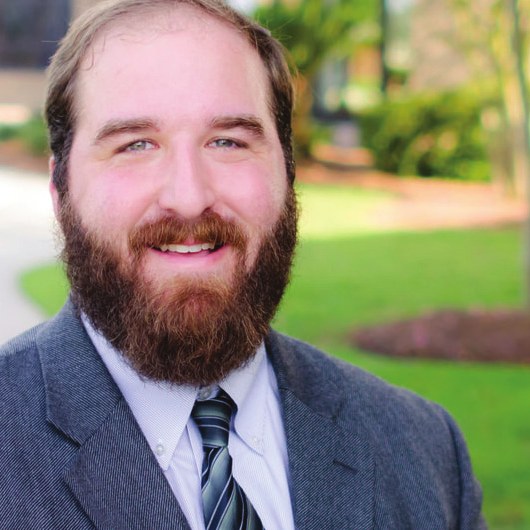
The following article is slightly abridged from the foreword to Fitting Words Classical Rhetoric, published by Roman Roads Media, 2018.
“The final proof and product of clear thought is clear speech.”
John Milton Gregory, Seven Laws of Teaching
God Speaks
We must begin where it all begins. God speaks. It is. It was. It will be. There has never been and will never be a time when God is not speaking, when He stops caroling, cantoring, creating, and communing. Therefore, if we want to set for ourselves a proper introduction to human speech, we must begin by seeing aright the divine dialect. We must begin with what higher scholars might call a theology of rhetoric. A Christian theology of rhetoric would make a few initial and important claims about speech: speech is a gift, speech is a matter of love, speech is personal, powerful, mysterious, good, and sacrificial. When we begin there, when set Trinitarian categories among our assumptions about speech, we are placed on firm footing, and we are therefore able to see where things have gone and can go wrong when it comes to speech.
Speech is a gift, speech is a matter of love, speech is personal, powerful, mysterious, good, and sacrificial.
Brian Daigle
We Mumble
If we begin, as Scripture does, with “In the beginning,” and we continue to followthe biblical narrative, we see then that speech—as a gift, as a matter of love, as personal and powerful, as mysterious and good and sacrificial—is subject to man’s fallen nature. Therefore, not only must we see aright a theology of rhetoric, we must also see aright a sociology of rhetoric. We must know that our Triune God is a God who speaks, and we must also know that man mumbles, in more ways than one. Our mumbling nature has perverted, we may even say our mumbling nature has profaned, all our speech acts. Though speech is a gift, we are ungrateful. Though a matter of love, we persuade ourselves and others to love the wrong things. Though personal and powerful, we use it to manipulate others to our selfish ends. Though mysterious and good, we dissect and degrade. Though sacrificial, we make it superficial. If we wish to make any worthy headway in a proper study of rhetoric, we must begin with these two important propositions: God speaks, and we mumble.
We Repent
So, welcome to that introduction which a high school student, or most adults for that matter, would rather not have to read: “The time is fulfilled, and the kingdom of God is at hand: repent ye, and believe the gospel.” (Mark 1:15, KJv) Repent. Believe. Love your neighbor. Love God. This is the whole of the Christian life; there is nothing more. And that means this is the whole of every discipline a Christian attempts to master. The typical reader may have entered into this curriculum with grand visions of academic copiousness and all the treasures afforded to us by classical Christian education. “Surely,” the young man may say, “here I will study (clears throat followed by a slight and sophisticated roll of his tongue) rrrrhetoric!” And here this same young man reads a complete stranger telling him that this study will indeed be accompanied by great treasures, but that the key to those treasures, the key to true copiousness, is that same dreadful thing perhaps his pastor and parents have been saying all along: You are not God. In short, be humble. If we can begin with a theology of rhetoric, followed by a confession—an agreement, that we are indeed naturally bad rhetoricians—then we may get to the best starting place of all: humility. We have, therefore, gone through a kind of initial liturgy into rhetoric, and so now we may commune together at this finely set table in this fitting curriculum.
Rhetoric in the Hands of an Angry Mod
There are many things these days that get into a Christian’s head, and not all of them are worth having there. Some things that find their way in may tend to dismember the Christian’s body of knowledge. Other things seek to numb, inoculate, or just provide a light and momentary fog. Others clarify, convict, and congeal, leaving him better off for having let that thing run its course in the mind. Whatever enters a Christian’s head, it will either help or hurt one of his great responsibilities: “Go, stand in the temple and speak to the people all the words of this Life.” (Acts 5:20) Rhetoric, like logic, is not the kind of discipline that we either let in or not. It’s not the kind of thing we choose as a part of our lives. Rhetoric, and its constituent parts, is one of those rare disciplines which will be there whether we want it or not, and it will have its way with every other thing we let enter our head and heart. Consequently, rhetoric is one of those rare human disciplines that, as we get into it, it gets into us—each and every area of our lives. When it matures in us, it matures all things in us, the good and the bad. And when it is weak and inadequate in us, it malnourishes every part of us. But it is not enough to just study rhetoric; we must study it well, in the broader framework of the Christian life, and that is far more difficult than learning a few rules to untie our tongues.
It is my wish we were a tongue-tied people, for fixing that is a matter of mechanism. We are far worse off. We are a people whose rhetorical imaginations are in knots. The very words that would free us from linguistic lunacy are the very words which have been hijacked and turned against us: logic, reason, faith, religion, love, and, worst of all, rhetoric. Find a man who has studied logic in the contemporary university, and we would be disappointed to find how illogical such a study has made him. Sit next to a man who has discovered his faith, a man who glories in having explored the vast religions of the world, and we would find he knows very little about honest faith and true religion. The same may be said of rhetoric. Most men today who speak of rhetoric are the ones least equipped to do so, for they are the ones who have merely picked her up secondhand from a crowded tavern. That man has not courted Rhetoric. He has not dined with her and met her parents. He has not taken the time to learn her language, to understand her strengths and weaknesses. He has not met her brother Logos and her sister Sophia. The modern man who espouses the word rhetoric is least of all to be trusted that he should teach us anything worthwhile on the subject. And so, for those who have studied the ancients on the subject, we find ourselves in a familiar place. There has never been a time when rhetoric has not been perverted. There has never been a man who has not been prone to abuse her. And there has never been a society which can function well without her.
Speech is pervasive because it is in its essence a reflection of how God made and upholds the world. Speech is not just one part of God’s being, it is coextensive, cooperative, and coeternal with His being. It is how He has made the world, how He has made us. If something is, then God has said it. If God says it, then it is. Speech is the same way for us. As St. Augustine asked, “Since rhetoric is used to give conviction to both truth and falsehood, who could dare to maintain that truth, which depends on us for its defence, should stand unarmed in the fight against falsehood?” (De Doctrina Christiana IV)
Philosophically, rhetoric is, along with logic, a branch of epistemology, the study of knowledge. Because our God is a revelatory God, epistemology cannot be a side dish in our academic menu. Like logic, rhetoric is one of those self-evident disciplines. Asking “Why rhetoric?” is similar to asking “Why logic?” Again, the answer is self-evident. Without logic, the question couldn’t exist. Without rhetoric, the question couldn’t be well answered. The question, then, is not, “Why should we study rhetoric?” The more appropriate question is, “How could we not study rhetoric?” Hear St. Augustine again, “oratorical ability, so effective a resource to commend either right or wrong, is available to both sides; why then is it not acquired by good and zealous Christians to fight for the truth, if the wicked employ it in the service of iniquity and error, to achieve their perverse and futile purposes?(De Doctrina Christiana IV).
There is a danger, however, in answering this question and becoming convinced enough about rhetoric so that the school, the student, or the parent grabs this curriculum and dives in headlong. I address this danger when I speak to the seniors each year at our school’s commencement:
What you have received during your time at Sequitur has been invaluable, and certainly you have been invaluable to us. You will see this more in time. But we have only done work at the bottom, at the base. We have only sought to lay a foundation for learning. You could say we have only outlined the land and perhaps cleared the brush. Sure, you’ve read the greatest literature in all the world and discussed some of the most important ideas in all of mankind. From Homer and Dante to St. Augustine and O’Connor, you have explored the earthly and the divine. You have grappled with the ideas we judge by (truth, goodness, and beauty) and the ideas we live by (liberty, equality, and justice). You have been introduced to the importance of a sharp mind, a humble heart, and faithful hands. And this education has been only that: an introduction. While you have had classes the angels envy, you have had these in your adolescence, at a time when you have been distracted, enthralled, and bombarded with other things, for this is the nature of immaturity: we seek what we ought not to seek and love what we ought not to love.
Worthy speech can only come from good men and women.
Brian Daigle
There is a danger in putting this kind of book in a young scholar’s hands; it is the same danger in giving a mere human a good education whatsoever: it is a gift that can indeed be used for ill. And it is easier to get caught in the trappings of the tool without paying attention enough to the kind of hand that wields it. This is particularly true of speech, and it is in even greater danger of becoming true of us today, if the rules of persuasive speech get into the hands of an angry mod, a discontent modern man or woman whose chin is too high and whose gaze is too inwardly turned. So we return to where we started: enter these pages with gratitude, humility, and repentance. That is the only path forward. Do not underestimate the component of classical rhetoric which states that good speech and ethics are inseparable; worthy speech can only come from good men and women. As said at the beginning, part of the answer for why a formal study of rhetoric has not yet invaded every school in this country is because we do not desire enough to know the truth. We enjoy our mumbling far too much. We, like our idols, want to live in the muddled and mumbled middle, at best. We perhaps want just enough clarity to confirm our idolatry, but no more. Therefore, Christians who are serious about their faith and the implications thereof will eventually come to see that one of the greatest disciplines we can mature in is our ability to speak the truth beautifully, and that means rhetoric. If we want to love our neighbor, engage in cultural critique, hear and understand God’s Word, persuade the lost to be found, convince the unfaithful to return, and assess where we and others may be going verbally wrong—in short, if we want to be faithful and maturing Christians—then studying rhetoric is not an option. It is not an elective. It is a necessity. And unless we want to learn it poorly, we then need a good path to tread. Because Rhetoric has been so poorly treated, and but for the grace of God go we, we therefore need a chaperone in this endeavor. We cannot leave her unwed, for a far worse man will find her. We cannot leave her unloved. As Christians, there are no people more burdened with the task of properly courting and committing to Rhetoric. This curriculum is a fitting chaperone for such a calling. Here, in these pages, is our good path.
Works Cited
Augustine, De Doctrina Christiana, IV.
Thomas W. Benson and Michael H Prosser, eds., Readings in Classical Rhetoric (David, CA: Hermaoras Press, 1988).

From Roman Roads Press
 Short Tips for Writing Short Essays
A pocket primer on writing short argumentative essays: grammar, eloquence, content, ten principles and five appendices. By Brian G. Daigle, third edition.
 A Better Admissions Test
Eleven essays by classical educators, college presidents and homeschool leaders on what entrance exams do to schools, and the case for the Classic Learning Test. Edited by Brian G. Daigle.