
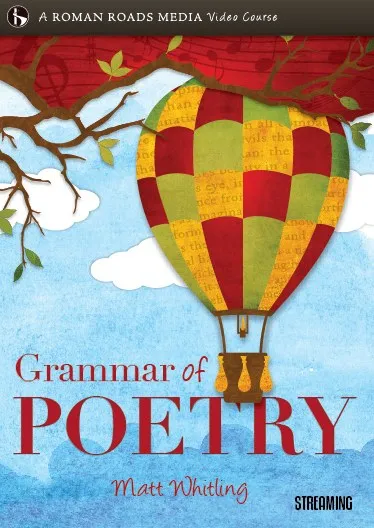
The video course
$80Matt Whitling teaches every lesson on video, with the poems on the screen beside him.
- 30 lessons in 6 hours, with a conclusion
- Eight poems from the course, read aloud
- In the Roman Roads app, yours to keep

Imitation in writing · Matt Whitling
The building blocks of poetry, learned by imitation. In thirty lessons Matt Whitling takes students from simile and rhyme through meter, the four poetic feet and ten tropes, and has them write in each form as they go.
Developed and taught at Logos School in Moscow, Idaho. A semester for grades 6–9, and just as good for an older student, or a parent who never learned how a poem works.
 Watch the animated introduction3 min
What the course teaches
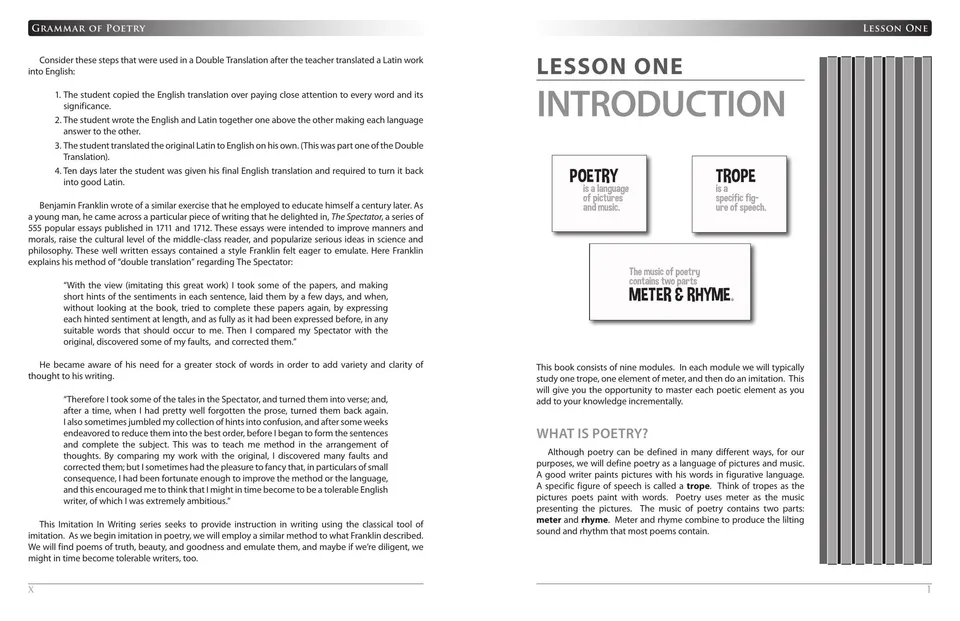
So the book defines it in Lesson One, and the course is built on it. “In each module we will typically study one trope, one element of meter, and then do an imitation.” Grammar of Poetry, Lesson One
Ten tropes: the pictures poets paint with words, one in each module, with a riddle or two to solve.
Meter and rhyme: how to hear the beat of a line and mark it, the four feet, and how to use a rhyming dictionary.
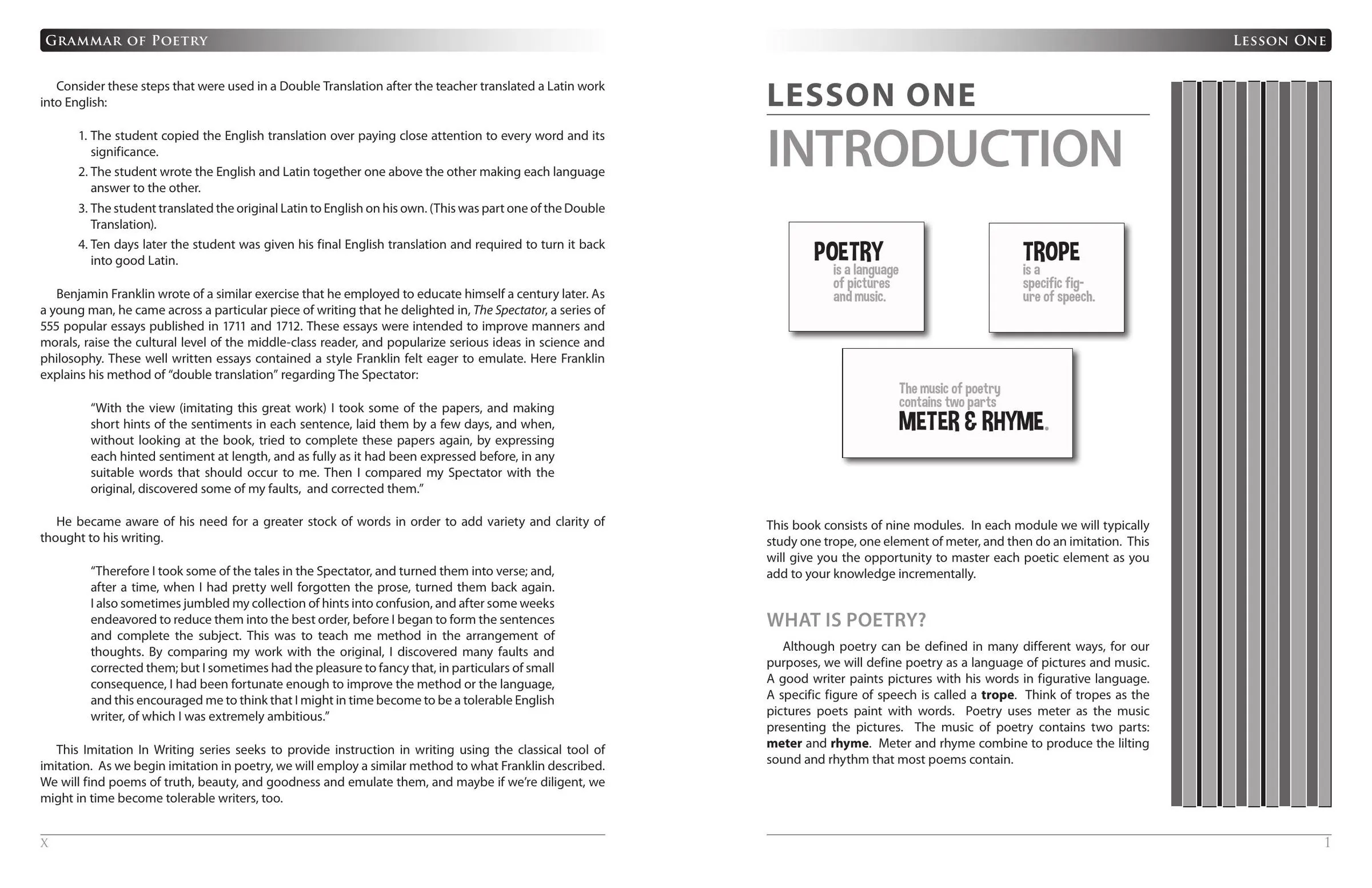
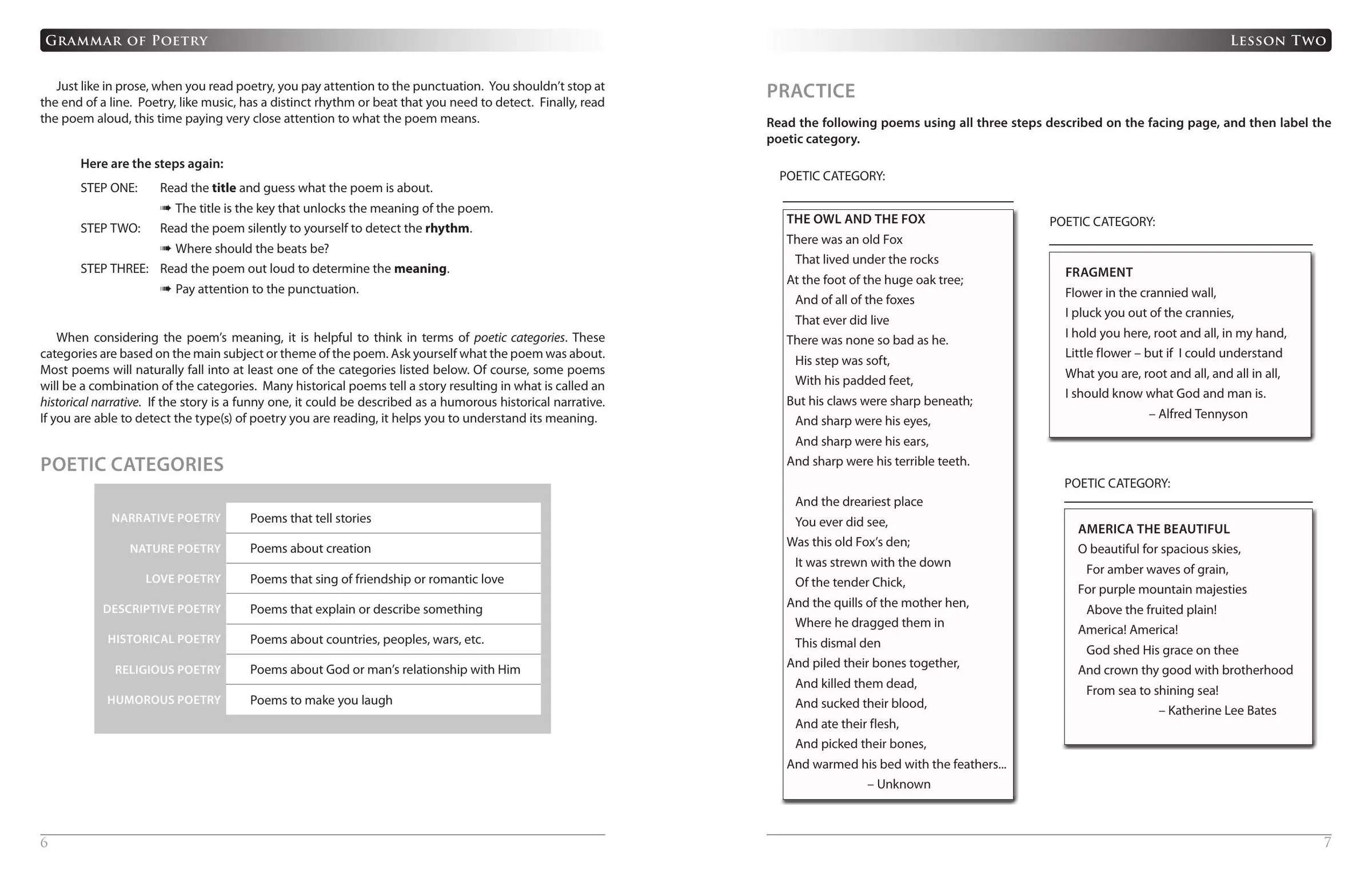
Each module ends with a good poem to scan and then imitate, so students write in every meter they learn, the way Franklin taught himself to write from The Spectator.
The course
The video teaches the lesson, the Student Text holds the work, and the Teacher’s Edition holds the answers.
Matt Whitling teaches every lesson on video, with the poems on the screen beside him.
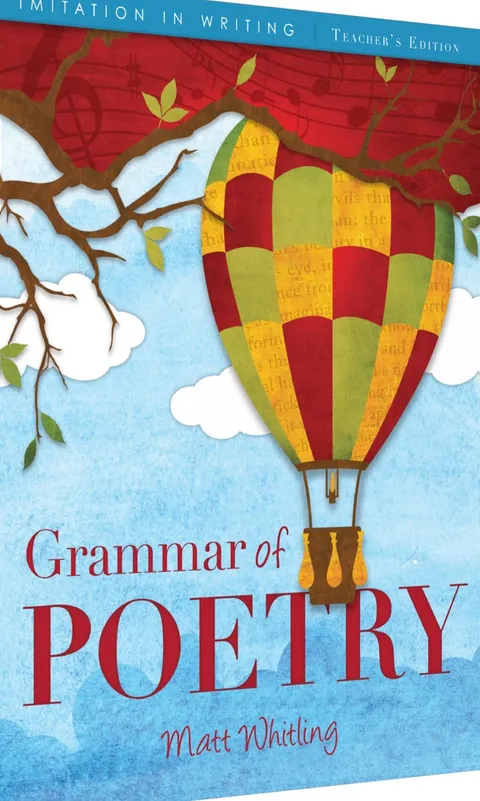
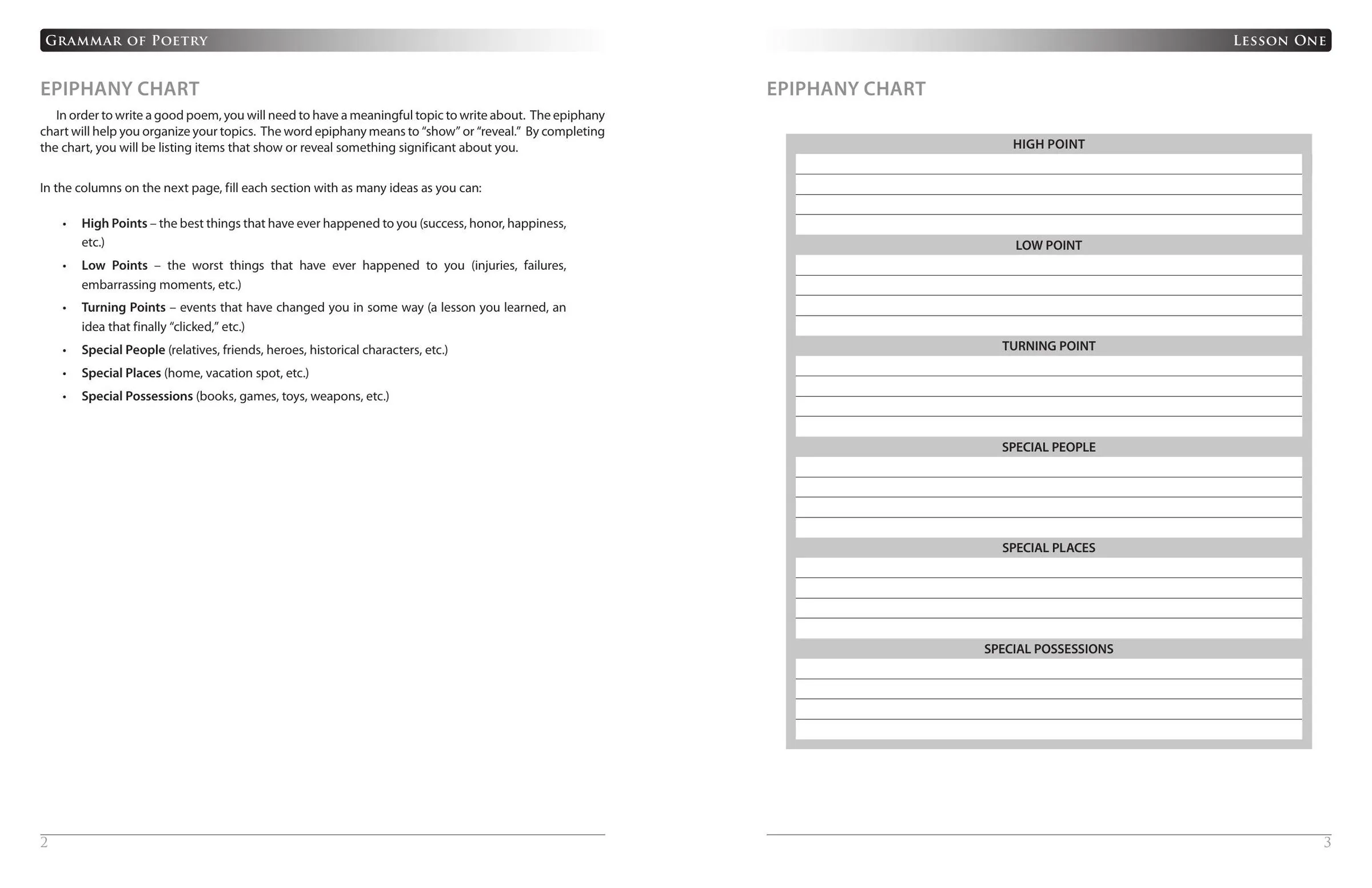
Every student page with the answers filled in, and what you need to run the class.
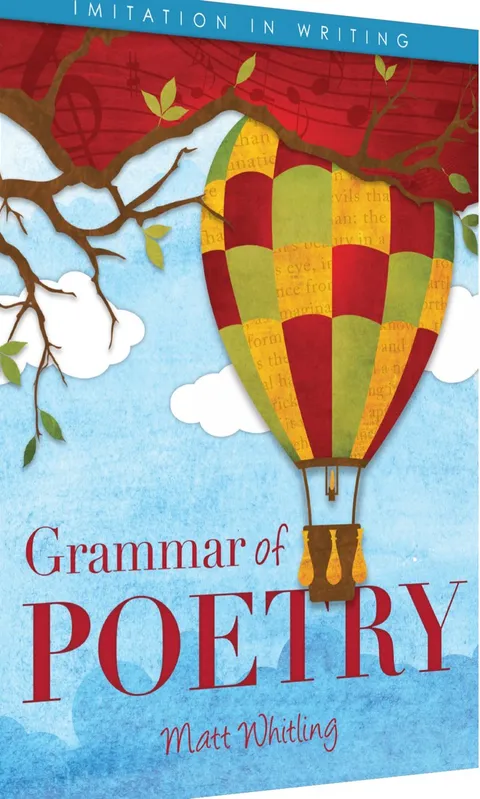
The textbook is the workbook: one for each student, written in and torn out.
Watch before you buy
The introduction, how the course runs, a homeschool mother on teaching it, a whole lesson, and one of the poems.
The video course
Two opening lessons, then nine modules of a trope, an element of meter and an imitation. Lengths from the app; Lesson 23 is free to watch.
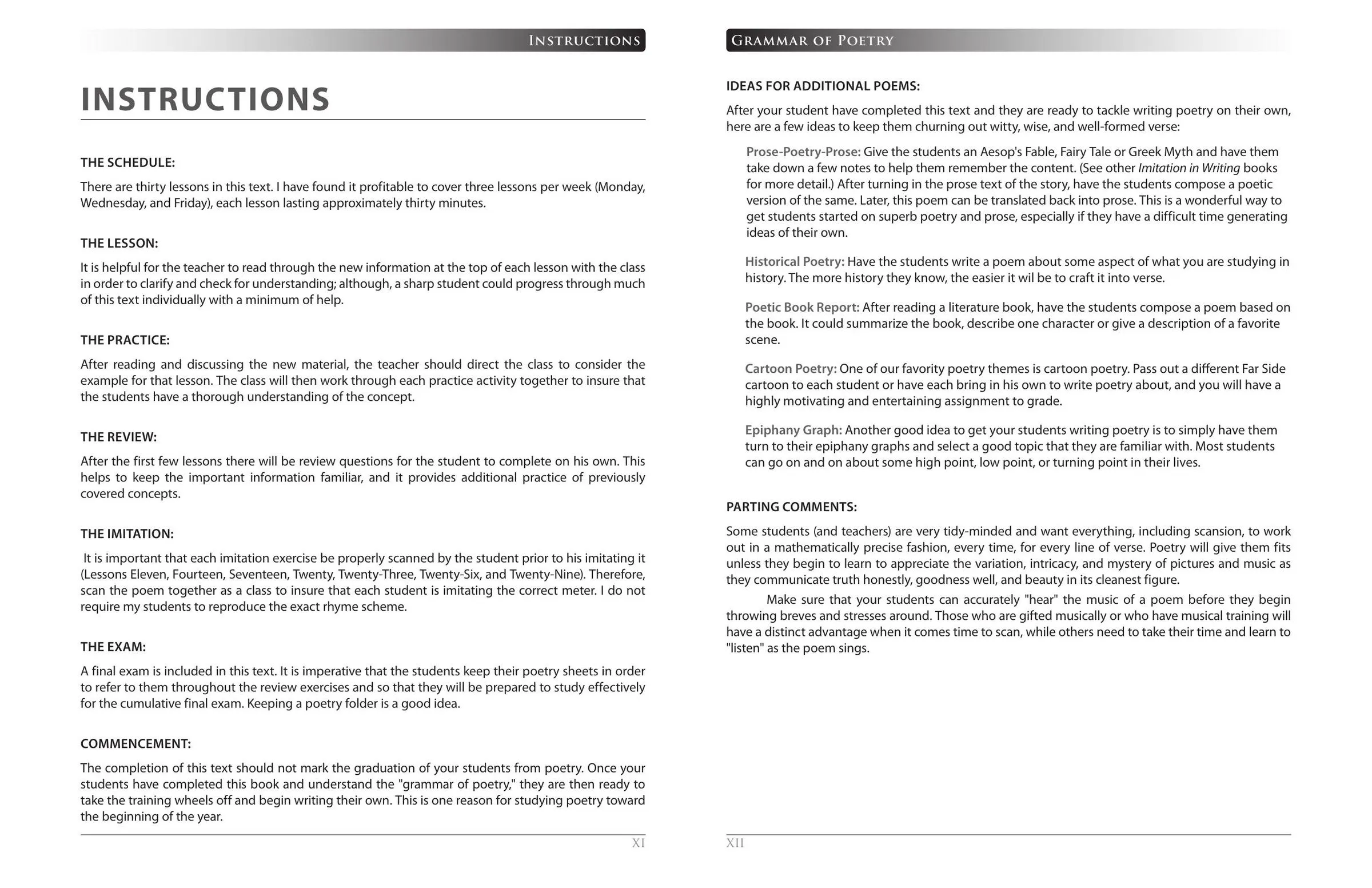
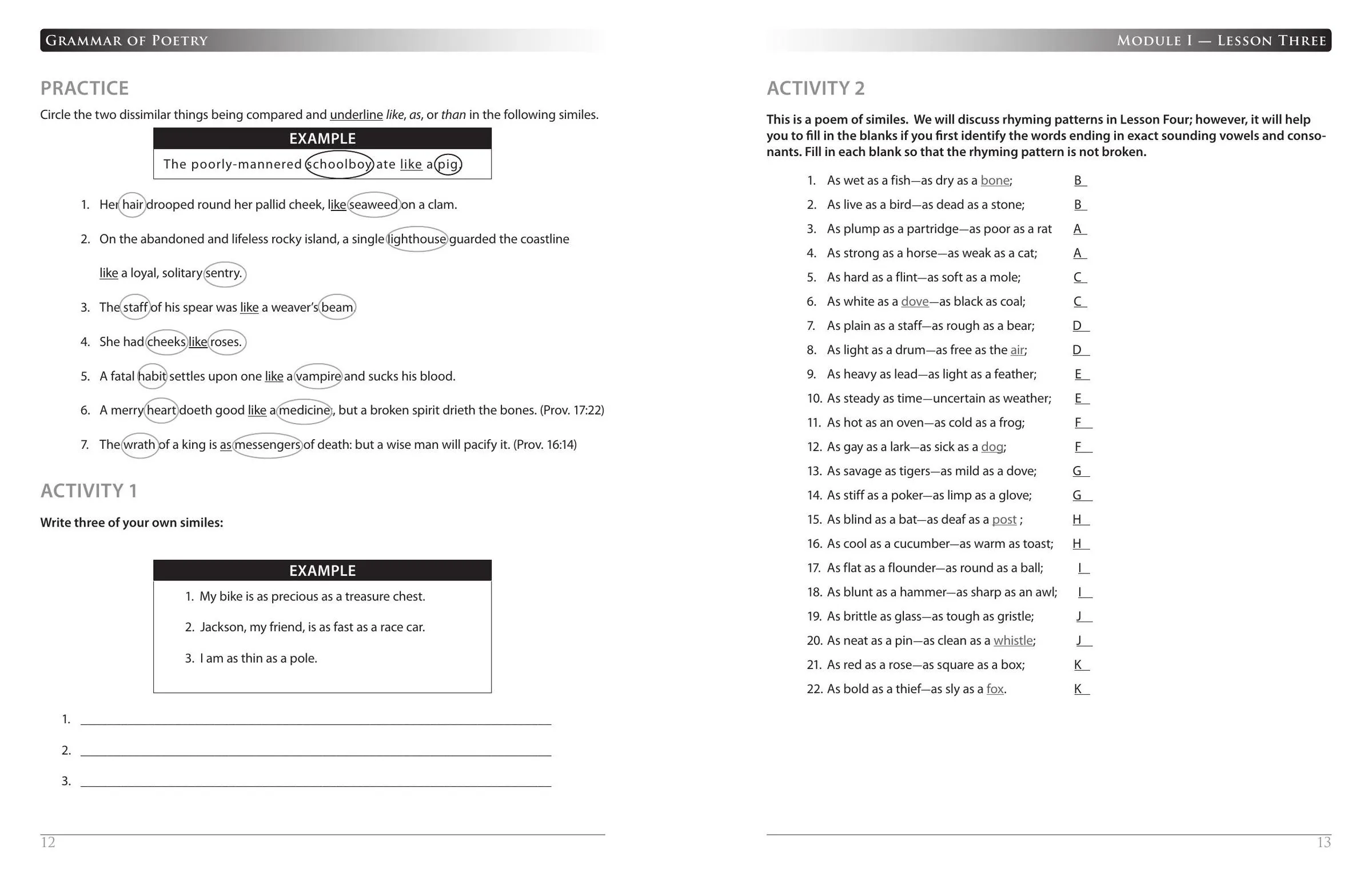
“We will find poems of truth, beauty, and goodness and emulate them, and maybe if we’re diligent, we might in time become tolerable writers, too.”
Matt Whitling, from the preface
How it runs
“I have found it profitable to cover three lessons per week (Monday, Wednesday, and Friday), each lesson lasting approximately thirty minutes.” Matt Whitling, the Teacher’s Edition
Watch the video, then read the new material at the top of the lesson together.
Work through the example and the activities as a class, or side by side.
After the first few lessons, review questions the student does alone.
Scan the module’s poem together, then write one in the same meter.
One cumulative final exam. Keep every poetry sheet in a folder for it.
The teacher
Superintendent of Logos School, Moscow, Idaho
Logos School is one of the first classical Christian schools of its kind in the United States. Matt Whitling wrote the Grammar of Poetry for his own students there; Logos Press first published it in 2000.
At a glance
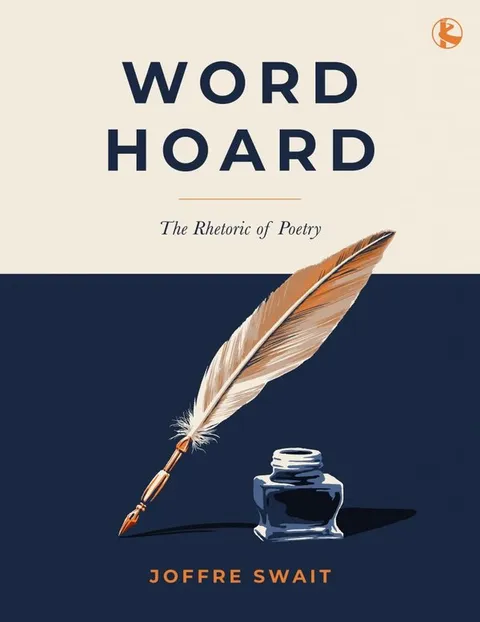
After the grammar, the rhetoric
For grades 11–12 and college: Joffre Swait’s course in reading, hearing, writing and performing poetry, the capstone of the sequence that begins here.
Yes. The exercises are in the book, on perforated pages, so each student writes in his own copy. Set the number of students in the box and it adds a Student Text for each.
It has every answer, the final exam and its key, and Matt Whitling’s notes on grading a poem, which is the part most parents find hardest. A confident teacher could do without it; most families don’t.
In the Roman Roads app, on a phone, tablet, computer or TV. It opens as soon as you order, and it stays in your account.
It is written for grades 6–9, but nothing in it is childish: it suits any student, or adult, who can write a good sentence and has never been taught how a poem works. High schoolers can go straight on to Word Hoard afterwards.
The video course, the Teacher’s Edition and the Student Text: all three for $119.
Choose what you need