Note from the Publisher
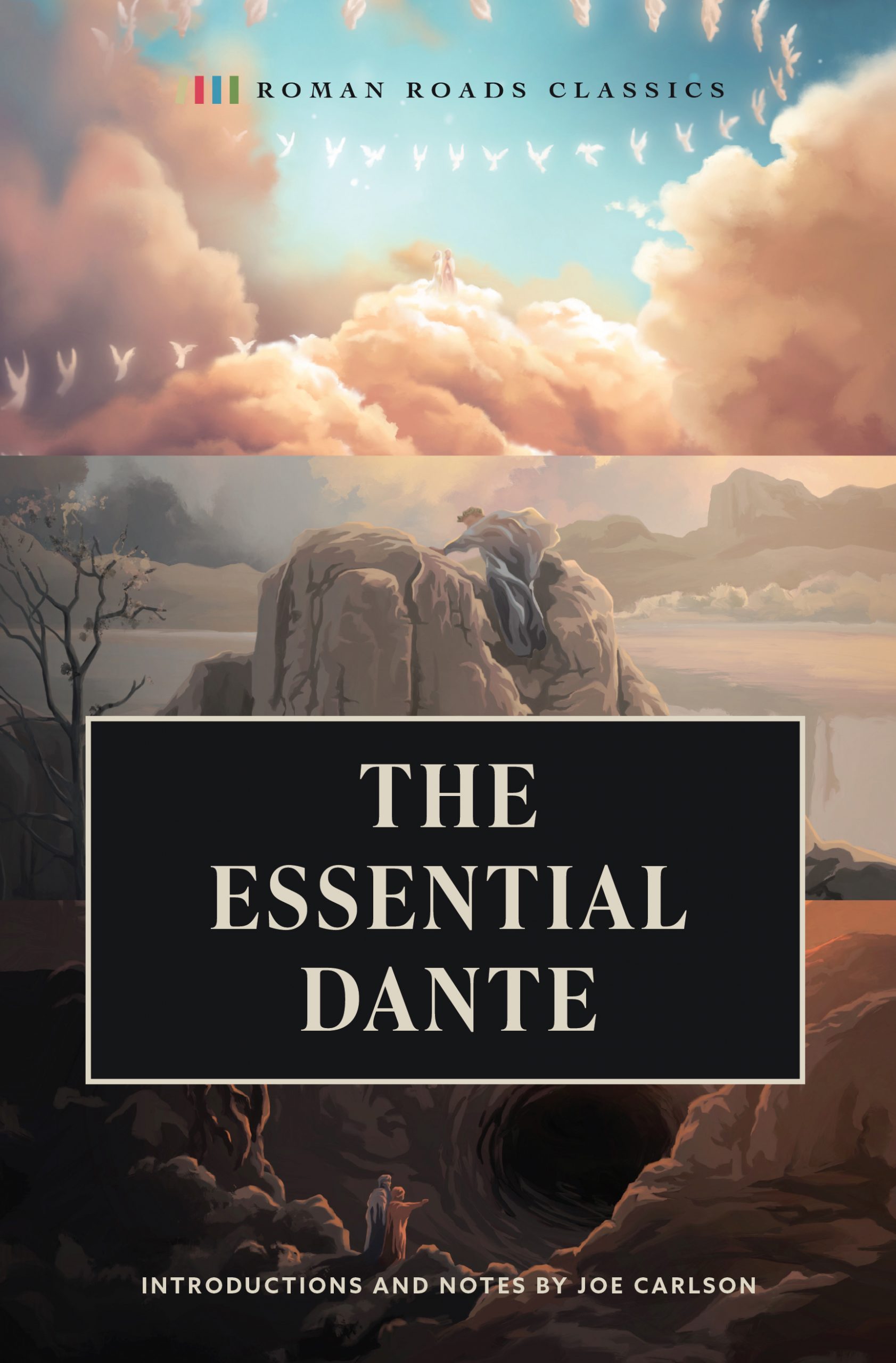
The following volume offers the reader a small window into everything Dante wrote. The word “essential” is not meant to indicate that those passages not included are not equally important to understanding Dante. Rather, it is a concession to the very real limitations of our created existence: not everyone can read everything. Therefore, what we do mean by the word “essential” is that here you will find in abridged, representational form the whole of Dante’s legacy.
Where this act of abridgment hurts the most is with the Divine Comedy. Whereas one does not need to read the entire Convivio, or De monarchia, or all thirteen of his epistles, one should absolutely read the entire Divine Comedy. Indeed, there is almost a feeling of sacrilege in abridging this greatest of poems. Therefore, an explanation for why we only include 34 cantos of the total 100 is necessary.
Many schools are simply unable to read the entire Comedy in their literature programs. Instead, they read only the Inferno. But in doing so they give the students a truncated and distorted percep tion of Dante’s project. Reading just the Inferno is akin to reading only the first two acts of Hamlet, or Crime and Punishment up until the point where Raskolnikov murders the pawn broker and her sister, or only The Fellowship of the Ring. This volume, therefore, offers something of a compromise.
If a school or co-op is simply unable to read all 100 cantos, but is able to read 34 (the number of cantos in Inferno), a better solution would be to read a selection from all three parts of the poem. That is what we offer here. This selection of 34 cantos will give the student a far better understanding of the scope and purpose of Dante’s project than reading only the Inferno. Our goal and desire is that this selection would whet the student’s appetite for more, and motivate them to read the whole work at some point in the near future. To that end, in-depth introductions to each of the canticles and to the Comedy as a whole are included. The student will also find helpful summaries at the beginning of each canto, as well as summaries for the cantos that are missing.
Inevitably, some will disagree with our selection. Believe me, we are in complete sympathy with them in their disappointment. Abridging a work is a terrible business, akin to amputation. Furthermore, the danger in a volume like this is in providing an easy way out to those who are simply lazy and are looking for a “Cliff Note’s” edition. Nothing could be further from our intention. We would continue to argue that everyone should take the time to read the whole poem, thus making this volume pointless. But until that day comes, please accept this volume as a fruitful way to introduce the Divine Comedy, as well as the other things Dante wrote.