Candor: What Jane and Lizzy Bennet Can Teach Us about Charity
The Four Loves | A Series Exploring C.S. Lewis’ The Four Loves
One of Lewis’ great accomplishments in The Four Loves was his ability to push back against both the errors of his ancestors, and the errors of his own time. Like Augustine, Lewis understands that “our hearts are restless until they come to rest in Thee” as he writes about the different loves, from the familiar warmth of Affection, to the powerful bond of like-minded Friendship, to the intoxicating passion of Eros, to the grace-filled love of Charity. In this first installment, Leta Sundet explores “candor” as Jane Austen uses it. This idea of candor is closely linked to Lewis’ discussion of Charity, and encourages us to look at the world through the lenses of Grace.
[dropcap]T[/dropcap]hese days, to be “candid” is to be frank, honest, genuine. But the word didn’t always mean that. It used to be the name for a virtue that we don’t really have a name for anymore. Its obsolete meaning is “kindliness”: a disposition to think well of others, a tendency to give people the benefit of the doubt. It’s a virtue I think may go overlooked now that we no longer have a word for it.
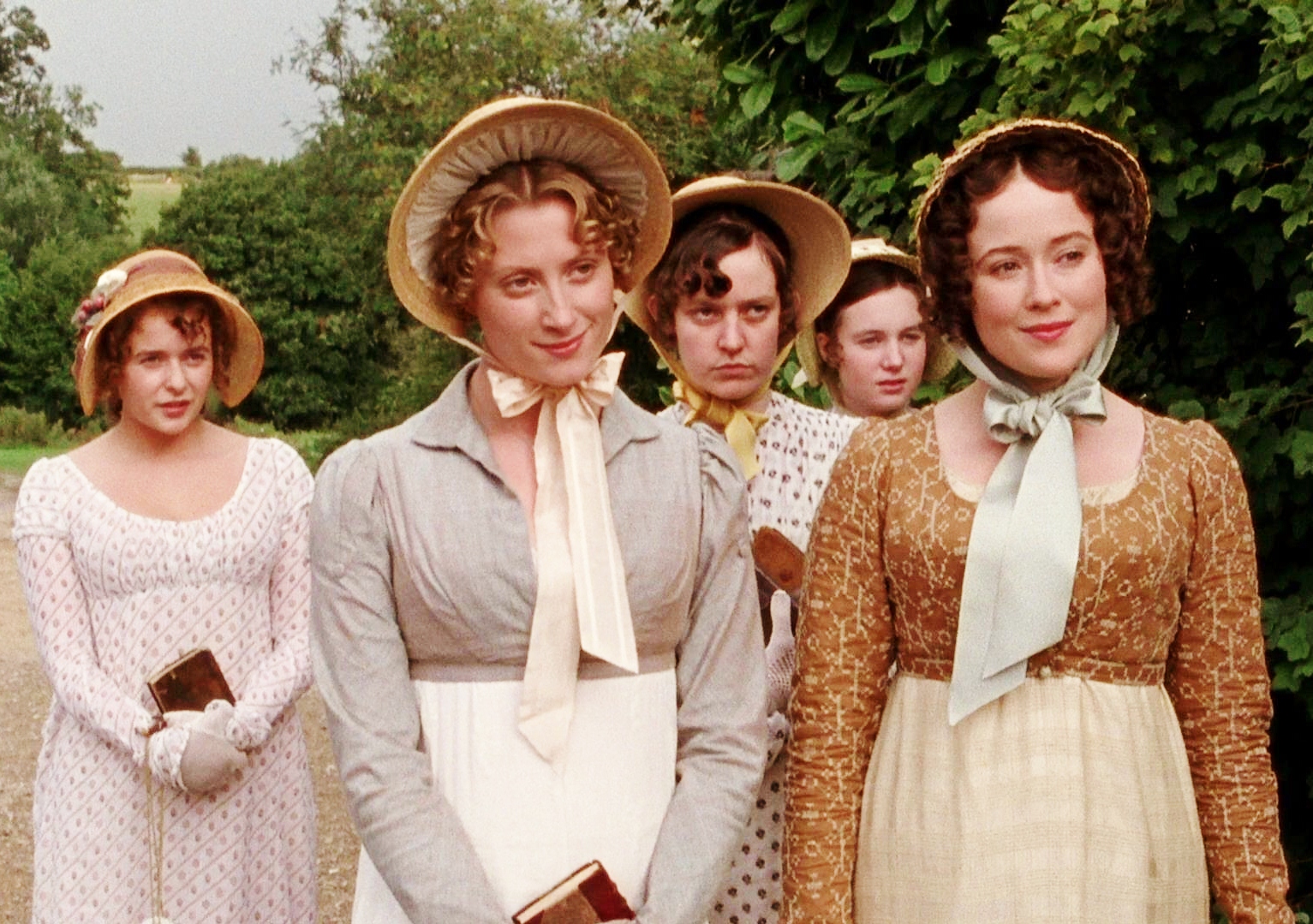
As late as Jane Austen “candor” still held this old meaning, and it’s a word and concept she returns to regularly in her novels. In Pride and Prejudice, it’s particularly crucial. When Elizabeth and Jane Bennet compare notes after a ball, Elizabeth laughs at Jane’s desperation to paint all the people whom Elizabeth is criticizing in the best light possible. Elizabeth tells her sister, “You are a great deal too apt you know, to like people in general. You never see a fault in any body. All the world are good and agreeable in your eyes. I never heard you speak ill of a human being in my life” (11).
When Jane protests that she only ever says what she thinks, Elizabeth responds, “I know you do; and it is that which makes the wonder. Withyour good sense, to be so honestly blind to the follies and nonsense of others! Affectation of candour is common enough;—one meets it everywhere. But to be candid without ostentation or design—to take the good of every body’s character and make it still better, and say nothing of the bad—belongs to you alone” (11).
Elizabeth is, of course, mocking her sister as well as complimenting her; while she admires Jane’s candor, she certainly has no wish to exchange it for her own incisiveness. Elizabeth worries that Jane’s “honest blindness” is going to get her manipulated, and, in fact, Elizabeth’s cynicism is later justified when Jane gets her heart broken.
Most of us probably share Elizabeth’s cynicism. “To be so honestly blind to the follies and nonsense of others” sounds like deadly naivete. Can candor as Austen understands it even be a virtue in a world that seems increasingly more dangerous, treacherous and simply disappointing, increasingly crawling with identity thieves, pedophiles, and plain old liars? We’ve all memorized the verse “Be wise as serpents, innocent as doves,” and we find a lot of relief, I think, in the first half of that verse—the reassurance that Jesus didn’t want us to get walked all over just because we’re Christians.
But to equate candor with naivete is to shuffle over what candor really means, what it really diagnoses in us. Candor is primarily a virtue of the heart, a charity of thought, a generosity of desire. Candor is a way of loving the stranger, and, by extension, anyone who is even momentarily strange to us. Candor is wishing—and to that extent believing—the best of people.
Our world of increased communication is a world of exponentially increased miscommunication, mostly because we have so much contact now with people we don’t know. We now have access to the thoughts and opinions of individuals we will never meet. We don’t know the “backstories” of the authors of most of the blogs we frequent or the youtube channels we follow. We are not aware who got up on the wrong side of the bed this morning, who was abused as child, who hasn’t slept well for three weeks and who has been lonely his or her entire life. People might be anywhere on their journeys toward or away from God for all we know; sins that God has erased from his mind may still be affixed to the internet and downloadable—which is strange to say the least.
We decide who our friends and enemies are based on our reactions to their reactions to someone else’s reactions to something someone wrote two years ago when they hadn’t had their coffee or their conversion yet. There will always be wars, virtual and otherwise, and sometimes it will be necessary to fight in them. But so much of the time—too much of the time—we’re shooting in the dark. The question is, do we like it that way?
It’s a problem we face all the time and everywhere. Other people are fundamentally enigmas to us, no matter how good we are at guessing their thoughts. We’re always looking at and talking to and using the same toothpaste as strangers—and sometimes as enemies. How many times when they come downstairs in the morning and give a less than cordial response to our chipper greeting, do we decide—no, not just decide, wish and therefore decide—that they’re feeling malicious toward us and deserve our maliciousness in return? How many times when they cut us off in traffic do we assume—no, not just assume, hope and therefore assume—that they are not little old ladies who forgot to check their blind spots, but soulless teenagers who deserve every speeding ticket they will ever get?
Why do we hope that? The relationship between what we believe and what we want is extremely tight, and this should make us second-guess some of our cynicism. In his essay on forgiveness in Mere Christianity, Lewis says that the real test of love for enemies is this: “Suppose one reads a story of filthy atrocities in the paper. Then suppose that something turns up suggesting that the story might not be quite true, or not quite so bad as it was made out. Is one’s first feeling, ‘Thank God, even they aren’t quite so bad as that,’ or is it a feeling of disappointment, and even a determination to cling to the first story for the sheer pleasure of thinking your enemies as bad as possible? If it is the second then it is, I am afraid, the first step in a process which, if followed to the end, will make us into devils. You see, one is beginning to wish that black was a little blacker. If we give that wish its head, later on we shall wish to see grey as black, and then to see white itself as black. Finally, we shall insist on seeing everything—God and our friends and ourselves included—as bad, and not be able to stop doing it: we shall be fixed for ever in a universe of pure hatred” (106).
“The sheer pleasure of thinking our enemies as bad as possible.” Who of us is innocent of this? Who of us has not had wishes that contradicted our prayers? Who of us has never, at the end of a plea to God for someone’s change of heart, added a quiet—and self-satisfied— “Oh but he never will.”
Righteous indignation is a pleasure—a rich and dizzying one. Like all pleasures that intense, it’s one that our bodies and souls are made for, an eschatological longing, and one that we should therefore be incredibly wary of satisfying this side of death. It must be constantly brought up short against the reality of the human beings around us, who will be the victims of it.

After Ahab murders Naboth, God, like the righteous judge he is, goes after Ahab. As we read the passage, our hearts rise with anticipation for what God is finally going to do to this king of villains. But Ahab anticipates it too: “And when Ahab heard those words, he tore his clothes and put sackcloth on his flesh and fasted and lay in sackcloth and went about dejectedly. And the word of the Lord came to Elijah the Tishbite, saying, ‘Have you seen how Ahab has humbled himself before me? Because he has humbled himself before me, I will not bring the disaster in his days’” (1 Kings 21:27-29).
How can we help but stand there with Elijah looking incredulous. “You’re joking, right? This is Ahab, remember Ahab? You’re not seriously falling for this. Not again. Good grief, you realize they’ve all figured out how to play you? “
Most offensive of all is that excited tone we can catch in God’s voice, excitement straying even into pride: “Look! Elijah, look! Did you see this?” Who can blame us for being offended? God is getting taken advantage of once again, and he seems to want to.
But haven’t we all figured out how to play God? Don’t we all know how take advantage of the generosity of His heart?
Elizabeth Bennet has the mind of a critic. She never wishes it away. But Elizabeth’s heart does change, and it changes when she gets a good long look at herself, when she sees the true source of some of her own criticism. She thought she was being objective, rational, wryly perceptive when she judged the two men competing for her affections; really she was responding instinctively to their treatment of her. One flattered her vanity, so she bestowed on him her good opinion; one insulted her, so she thought of him with corresponding disdain. She wanted Mr. Darcy to be evil, so she believed he was. As a result of this self-searching, Elizabeth condemns her cynicism: “How despicably I have acted! . . . I, who have prided myself on my discernment!—I, who have valued myself on my abilities! Who have often disdained the generous candour of my sister, and gratified my vanity in useless or blameable distrust” (136). She concludes that her cynicism was not wisdom but pride.
The key to candor, to a genuine generosity with the people around us, is self-knowledge, a healthy, hearty acquaintance with ourselves, with the tugs and tendencies of our own hearts. When we feel the urge to pick up stones and hurl them at strangers, we must hear the voice of Christ asking not only if we have really never sinned before, but if we are not sinning now. What sort of mess would we be in at this very moment if someone wasn’t wishing us well?
This will sound very anticlimactic, but when we face our human enemies, we need to face them as literary critics. A good critic does not react to what he reads. He reads it. He reads it carefully, over and over if necessary. He considers its genre, its context, its author, its author’s intentions, stated and unstated. He considers what circumstances the author himself may have been reacting to. And then, given all that consideration, he gives the work the most generous interpretation he can. The virtues of a literary critic are patience and generosity, but something deeper too: the good critic has to want there be something in that book to be understood—something, however small, that is worth understanding.
This will sound even more anticlimactic: we need to face our enemies like Jane Austen would. Ironically, she’s unflinching in her portrayals of human evil. But she also manages to convict—to create in her readers not a whole lot of people rearing up in indignation, but a whole lot of people saying “Ouch.” I can only think that this is because Austen, intimately familiar with the motions of the human heart, knew about evil because she knew herself, and that we as readers can’t help but pick up on this spirit of self-diagnosis as we read her work. Her candor forces us to be candid— in both senses of the word.
At heart, the two meanings of “candor” are not, in fact, unrelated. If one is the honest recognition of our own need for grace, the other is our determination to give it. In which case candor is not simply a neglected virtue: it’s our whole life. We love because He first loved us.
Works Cited
Austen, Jane. Pride and Prejudice. Ed. Donald Gray. New York: Norton Critical Edition, 2001. Print.
Lewis, C. S. “Forgiveness.” Mere Christianity. New York: Macmillan Publishing Co., Inc., 1952. 104-107. Print.
This article was originally published by the Theopolis Institute. Reposted with author’s permission.

Leta Sundet is a PhD student in Literature at the University of Dallas. She received her M.A. in Theology and Letters and her B.A. in Liberal Arts and Culture from New Saint Andrews College. Her current literary interests include Jane Austen and Isak Dinesen.
Comments
Thank you! This is one of the most true and beautiful articles I have read in a little my time!
Certainly the word we should use to name the quality that used to be the old-fashioned “candor” is the word, mercy. Of course “mercy” is always being misunderstood as “grace.” While mercy is certainly gracious, it is wrong to use adjective as a synonym for the noun. Mercy is a part of grace. Mercy may impart grace. But mercy is not grace, and grace is not mercy.