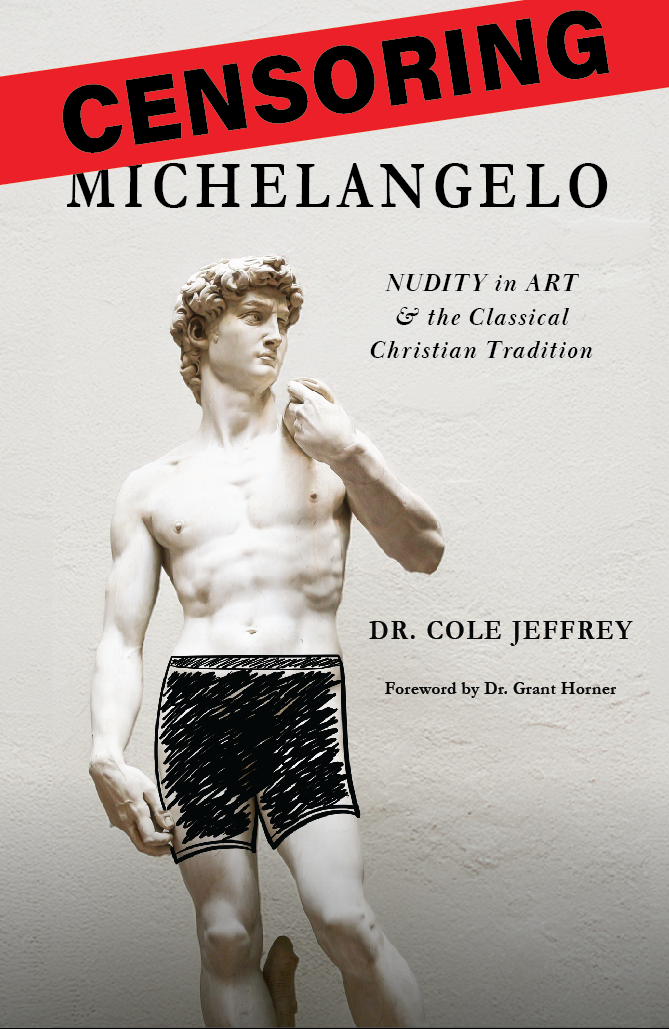
More about the book
To receive a true classical education, Christian students must study great works of art from the classical era through the Renaissance. Many of these works will contain nudity. Exposing students to such works is one of the most controversial issues in classical Christian education right now. In 2023, for example, a Christian school in Florida made international news when it fired its principal for showing students images of Michelangelo’s David.
And yet few scholarly or spiritual resources exist to address this topic. That is why Dr. Jeffrey’s book is desperately needed. In Censoring Michelangelo, he addresses this controversial topic from both a biblical and historical perspective. Many Christians believe the human body must be perpetually covered because it is inherently shameful. In his exegesis of Genesis, however, Dr. Jeffrey shows this is not the case. Original Sin did not change the moral nature of the human body. Instead, Original Sin changed humanity’s moral vision. Before Adam and Eve disobeyed God, they could perceive and respond rightly to everything God created, including their own bodies. But after they fell, they lost this vision. Because we are their fallen descendants, we have inherited their spiritual blindness. We struggle to perceive and respond rightly to the body. Pornography is evil because it intensifies our fallen struggle to recognize and respect the imago dei in others. But Dr. Jeffrey shows us that God can use great works of nude art to restore our spiritual vision, helping us perceive and respond to the body the right way.
In addition to his biblical exegesis, Dr. Jeffrey provides a historical overview that shows why nude art has always played an essential role in classical Christian education. He makes the distinction between art and pornography clear, and he provides helpful examples of how to teach nude masterpieces like Michelangelo’s David, Rembrandt’s Bathsheba at Her Bath, and Velázquez’s Rokeby Venus in the classroom.
This book is an invaluable resource for administrators, teachers, parents, and students who are trying to navigate the controversies surrounding nude art in classical Christian schoolrooms. But more importantly, this book will help anyone who is eager to learn more about the relationship between faith and art. This is a book for people who believe (or want to believe) that beauty matters.